




Strength training: Bone loading
You may be able to help your members and customers avoid or reverse osteoporosis by encouraging weight bearing activities, as Liz Terry reports


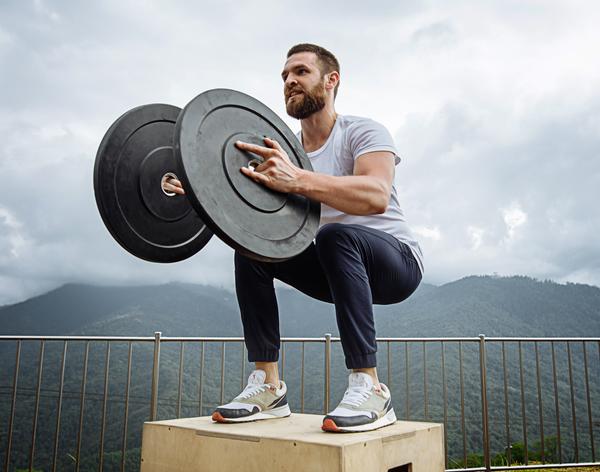
Having strong bones is essential to good health, especially as we get older, enabling us to remain active and with good vitality and quality of life.
Osteoporosis – brittle bones – is a highly debilitating disorder, which can lead to fractures and falls and it’s estimated that one in three women and one in five men will suffer from it in their lifetime and this number is growing as the population ages and people become more sedentary.
However, the good news is that the fitness industry has a big part to play in helping people who are susceptible to this disease to avoid it or lessen its impact.
How does it work?
Doing weight bearing activity is vital in achieving good bone health. The stress that is placed on the bones by exercises such as weight lifting, plyometrics and running stimulates the body to build and maintain strong bones.
It does this because the impact that is generated by exercise compresses the bone matrix, triggering the bone to take in calcium and other minerals and thereby increasing bone density which results in stronger bones.
What load is needed?
The amount of weight bearing that is needed to trigger this response is called osteogenic loading because it takes a certain ‘load’ to stimulate the bone building cells.
This ‘bone loading’ is essential if people are to maintain a healthy skeletal system, and we expect more fitness businesses to add bone loading to their workout options, as the demand for wellness services increases and people are more aware of the need to work hard to ensure a healthy older age.
When it comes to the impact of exercise on bone health, scientists measure activities according to how many multiples of body weight they load onto the skeleton.
A study by Kevin Deere, et al. at the University of Bristol in the UK looked at the bone loading which was needed to stimulate bone mineralisation in teenagers and found the amount of loading required was 4.2 times their body weight*.
This means if you weigh 130 pounds, you need to load your bones with 546 pounds to trigger bone building.
How to load up?
At rest, gravity applies a load to our bones which equals that of our body weight. Activities such as walking, jogging or running add more load, but much higher impact is needed to achieve a load of four times your bodyweight, with weight training, plyometrics or jumping being options.
Although the researchers cautioned the extrapolation of these results into other population groups, the results nevertheless highlight that light exercise is unlikely to be as effective as heavier lifting.
Adding bone loading to your repertoire as an operator or personal trainer will enable you to better serve members and customers, as well as enabling them to take steps to improve their long-term health, longevity and quality of life.
Researchers point out that while exercise such as cycling and swimming have excellent health benefits in areas such as flexibility, strength and cardiovascular capacity, they effectively ‘unload’ the bones, so any gym members who focus exclusively on these types of exercise and are without bone loading in their exercise regime as a result, may be susceptible to osteoporosis and would be advised to add more weight bearing activity to their workout programme.
Another area for consideration is the advice that people get to enable them to make the right exercise choices, as it’s important they avoid overloading and creating other musculoskeletal issues.
It’s advised that anyone with low bone density or osteoporosis works with a fitness professional to ensure that bone loading is done progressively and without causing harm.
* Deere, et al., Habitual levels of high, but not moderate or low, impact activity are positively related to hip BMD and geometry: results from a population-based study of adolescents.
JBMR, Vol. 27, No. 9, September 2012, pp 1887–1895

Community Activator Coach Apprentice
Membership Advisor
Customer Service Advisor
GP Exercise Referral Instructor
Swim Manager
Food and Beverage Manager
Activity and Wellbeing Coordinator
Membership Advisor
Food & Beverage Assistant



Catalogue Gallery



Company profile
Directory
Featured Supplier
Property & Tenders
Company: Lee Valley Regional Park Authority
Company: Newmark
Company: EiA Real Estate
Company: Savills
Company: University of Oxford