




How can we eradicate sexism in sport?


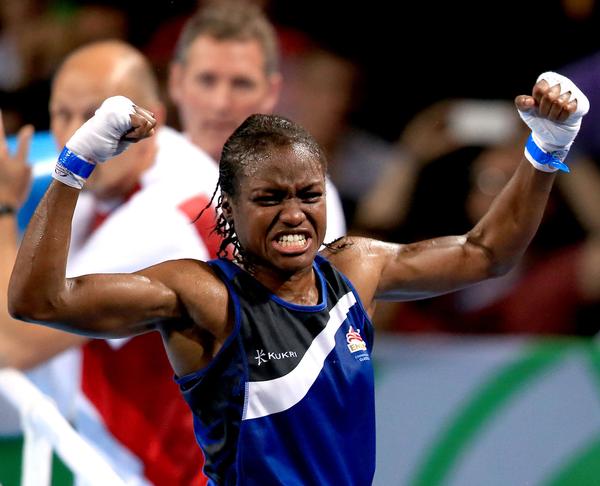
Sport England’s This Girl Can campaign was hailed a success in getting more women physically active.
Using images of real people – as opposed to models – the campaign was described by the Independent as the “first female health campaign that doesn’t shame or exclude women”.
The positive reaction to This Girl Can – combined with work to involve more women at board level in sport – suggests there’s still much to be done to combat sexism within the sector.
We ask our experts for their views.
Liz Dimmock,
Founder and CEO,
Women Ahead

While we can still see some disparities and inequalities in the narratives, reporting and policy for women’s sport, progress is being made.
The improvements don’t cover all sports and or institutions, but awareness, positive action and momentum is certainly gathering pace.
Within the business world considerable advances have already been made and the case for change is clear – more diverse boards in sport, and business in general, lead to better performance. Initiatives like the 30% Club, which aims to increase the pipeline and parity of women on boards, are now extending their reach to increase the pipeline and representation of women in leadership roles in sport.
Increasing the representation of women in decision-making roles in sport across the full spectrum of roles – from broadcasting and coaching to governance and sponsorship etc) –will create more balanced reporting, participation, policy and funding.
At Women Ahead we develop individual mentoring partnerships between leaders (male and female) across sport and business to create learning, awareness and opportunities. We believe this is a core element that will fundamentally change the landscape for women’s sport and ultimately society at large.
"Women Ahead develops mentoring partnerships across sport and business"
Anita White,
World Cup winning hockey Captain and Founder,
Anita White Foundation

Despite the progress that has been made over the past few decades in addressing issues of sexism in sport, it still remains challenge. This is because sexist attitudes are deeply embedded in our society and real social change takes time.
There’s greater awareness of the issues and people are more likely to say the politically correct thing, but this doesn’t mean their attitudes have necessarily changed: women and girls still experience sexism on a day-to-day basis.
To bring about lasting social and cultural change there needs to be action by individuals and organisations at all levels.
This must apply to everything from the way parents play with their young sons and daughters, to the choices teachers offer girls and boys in schools and the provision for extra curricular activities.
It must also apply to things like the community sports provision that’s offered and opportunities to develop talent and compete at the highest level and be recognised and rewarded for success.
All these need continued effort to ensure they’re not defined by a ‘taken for granted’ reality that values sport for boys and men more highly than it values sport for girls and women.
The words in policy documents sound a good note, but discussion and reporting still have a way to go and underlying attitudes need to be rigorously challenged.
"People say the right things, but this doesn’t mean attitudes have changed"
Ruth Holdaway,
CEO,
Women in Sport

Sexism is bred from inequality and there’s still a gaping chasm between genders when it comes to playing and developing sport.
Sport needs to be transformed from the inside out in order for women and girls to gain the same physical, mental and health benefits as men. This means the way sport is governed needs to undergo radical and sustainable change too.
While our 2015 research, Trophy Women?, found that sport has achieved sector gender balance targets on its boards, the statistics mask persistent barriers that undermine sustainable improvements for women at this level.
At Women in Sport, we believe that increasing the visibility of women’s sport – in the media and in everyday life is key to inspiring people to play their part at every level and make sport a normal part of life for women and girls.
Arguably the way women’s sport is reported by the media is a consequence of sexist attitudes toward sport and, therefore, crucial in tackling it. We’d like to see greater awareness and recognition of this responsibility from the media.
Our most recent research found 7 per cent of media coverage is of women’s sport, but less than 1 per cent of commercial investment in sport goes into women’s sport. Although we’re in the process of updating the statistics to see if this has changed, we’re not expecting to see a huge improvement yet.
"Increasing the visibility of women’s sport in the media is key to inspiring women and girls"
Professor Leszek Sibilski,
Sports Development Consultant,
UN and The World Bank

Women in sport got a bad deal from the beginning, as the founder of the modern Olympics, Baron Pierre de Coubertin – inspired by ancient Greece – felt the inclusion of women would be “impractical, uninteresting, unaesthetic, and incorrect.”
It wasn’t until the 2012 London Games that men and women competed in all sports – after the introduction of women’s boxing – and all participating nations sent at least one female athlete to the Games.
So while gender inequality still exists, there are encouraging signs to suggest progress is being made.
At UCI (Union Cycliste Internationale) events, individual prize money is equal between men and women. UCI is also experimenting with co-ed cycling competitions and invests in televising women’s cycling to promote it worldwide.
The New York City Marathon is another prize equaliser, while the US Open, was the first Grand Slam to offer equal pay in 1973.
In 2007, Wimbledon became the last Grand Slam to shake off its stodgy gender bias and equalise prize money.
However, it was only last year – at the 2015 FIFA Women’s World Cup in Canada – that complaints were raised about women’s games being played on artificial turf and offensive comments were made about female players’ appearances. There is, in other words, some way to go yet until women will be treated equally in sport.

Membership Advisor
Customer Service Advisor
GP Exercise Referral Instructor
Swim Manager
Food and Beverage Manager
Activity and Wellbeing Coordinator
Team Leader
Duty Manager
Membership Advisor


Swim Teacher
Food & Beverage Assistant

Catalogue Gallery



Company profile
Directory
Featured Supplier
Property & Tenders
Company: Lee Valley Regional Park Authority
Company: Newmark
Company: EiA Real Estate
Company: Savills
Company: University of Oxford