


Strength training: Is EMS training too good to be true?
EMS is a training method that claims you don’t have to be active every day – all you need is 20 minutes a week. Is this too good to be true? Kath Hudson reports


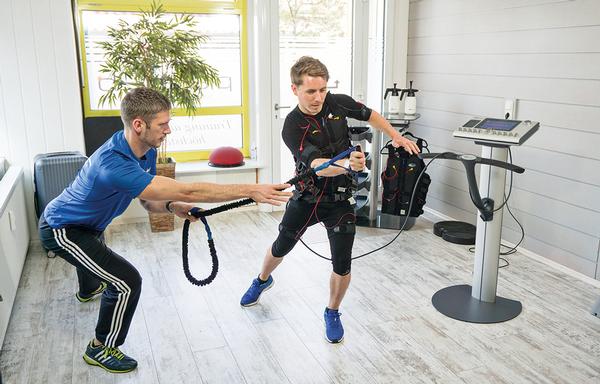
Already popular in Germany and embraced by many of its country’s Olympic athletes, a survey in that market showed that 40 per cent of respondents cite EMS (electronic muscle stimulation) as a fitness trend they’d like to try in 2017, at one of the country’s 1,300 studios.
Similar studios are already popping up in larger cities across the UK, but there’s still much education to be done before this market gets to the penetration levels of Germany. Nevertheless, suppliers believe that, once people start to see the benefits, the trend will take off, thanks to its appeal across the whole fitness spectrum. Serious athletes will use it to improve performance, while those who hate exercise will use it as an easy way to shape up.
HOW DOES IT WORK?
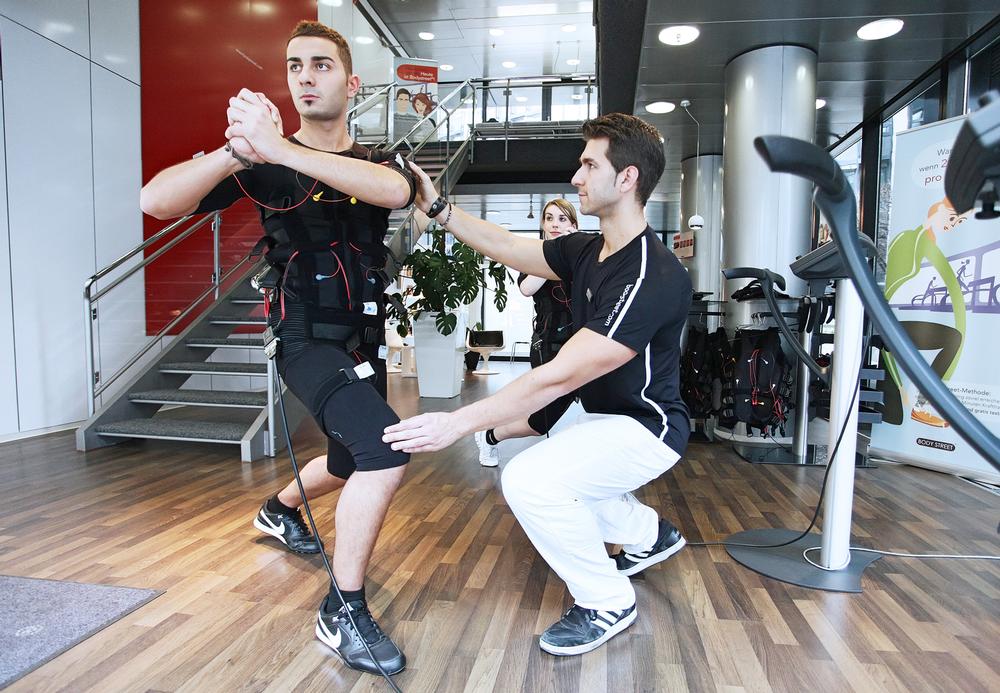
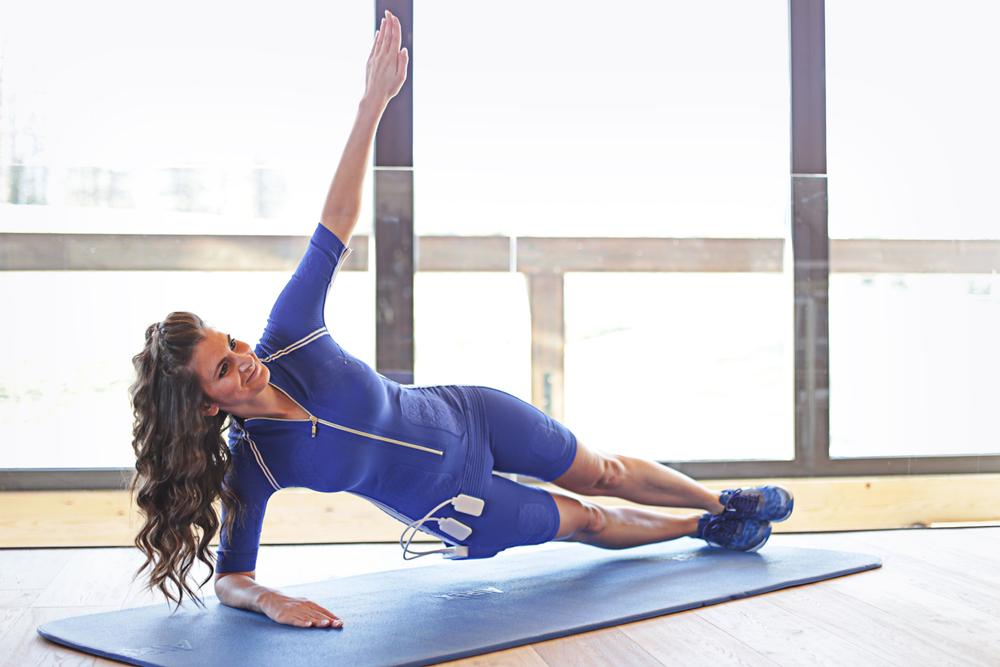
Simply put, a finely tuned electrical impulse is sent to the muscle telling it to contract; it feels like a vibration, not a shock. As a result, the muscles gain muscle mass, which leads to an increase in strength and power.
Specific muscle groups can be worked on, which means it can also be used as a rehab tool. “It’s a method that started its life in medical therapy,” explains Daniel Bambach, spokesperson for EMS supplier miha. In this context, EMS has been used to keep bodies alive after accidents, and has even been used on people in comas.
Another supplier, Easy Motion Skin, is keen to target the disabled market and has just signed high-profile skier Heather Mills as an ambassador. “Heather finds it hard to train her left leg, which is partially amputated, but EMS can address the imbalance,” explains Jan Ising, EMS professional at Easy Motion Skin. EMS is used more on her left leg than her right to build strength and strike a better balance in her body.
But EMS has also moved out of the medical and rehab environment and into elite sports, with athletes such as Usain Bolt and Bayern Munich FC recognising the impact the technology can have on power, strength and speed.
Studies have shown improvements across a wide range of measures among professional sports people, including a 4.8 per cent improvement in the sprint time of ice hockey players over 10m (Brocherie et al). Meanwhile, in freestyle swimming, a 1.3 per cent improvement in 25m times and 1.45 per cent for 50m have been recorded following EMS training (Pichon et al).
HIGH SPEED WORKOUT
And now the technology is moving into health clubs, as Bambach explains: “We’re seeing year-on-year growth in the private fitness market – and that’s because it works, as well as adding differentiation to a health club’s offering.” To back up his claims, he references a study that found untrained people using EMS combined with isokinetic training increased muscle size by 10 per cent over eight weeks.
Meanwhile, Ising points to research that highlights the efficacy of an EMS workout: “If you do an intense 30 minutes on the cross-trainer, wearing the device, it’s the equivalent of a four-hour strength workout.”
THE SCIENCE
Simon von Stengel, CEO of the training centre at the Institute of Medical Physics, Erlangen University, has conducted research into EMS and rates the technique as a way to increase muscle mass without loading the joints, as well as reducing body fat – especially in the abdominal region – and gaining strength and power.
“One study showed it can increase strength by 30 per cent in 12 weeks,” he says. “It can also activate the fast-twitch muscle fibres, which are difficult to activate, especially at lower intensity.”
But it doesn’t necessarily beat other forms of exercise – even in its heartland of strength training. One study compared EMS to HIIT in 30- to 50-year-old males. Over 16 weeks, one group did EMS for 30 minutes a week and another group did one hour of HIIT a week. Both saw significant improvements in strength, but the results were fairly even: a 10.5 per cent improvement in back strength for HIIT, and 12 per cent for EMS; and 14 per cent versus 8 per cent improvements in leg extension strength.
“This suggests that EMS is effective, but not more effective than conventional exercise. And it doesn’t have the other benefits exercise can have, such as improving stamina or co-ordination,” observes von Stengel.
TOO GOOD TO BE TRUE?
So is the claim – that one 20-minute session a week is all people need to do to improve their health – confusing?
It’s certainly a far cry from the 5 x 30 minutes currently recommended in the UK – and while EMS suppliers have a large body of research to show that the technology can be effective in helping people lose weight and build muscle and strength, there are many other benefits of physical exercise that EMS can’t rival: improvements in co-ordination, stamina and cardiovascular among them.
But as von Stengel explains: “EMS is appealing to those who don’t like sport, especially older people.”
And this is perhaps the point: EMS isn’t only for elite athletes and the highly motivated who want to use it to boost their results. If you’re a sedentary individual who isn’t particularly interested in exercising, EMS – with its quick and comparatively pain-free results – might just appeal to you where other forms of activity won’t. That arguably makes it a good starting point for those not yet engaged with the gym – a way of getting new people through the doors of your club or leisure centre.

Swim Teacher
Swim Teacher
Fitness Manager
Operations Manager
Contract Sales Manager
Membership Advisor
Recreation Assistant/Lifeguard (NPLQ required)
Team Leader
General Manager


General Manager
Swim Manager
Sports Coach
Sports Coach
Swim Teacher
Group Exercise Instructor - Aqua
Swim Teacher
Swim Teacher
Activity and Wellbeing Instructor
Swim Teacher
GP Exercise Referral Instructor
Duty Manager

Catalogue Gallery


Company profile

Directory
Featured Supplier

Property & Tenders
Company: Lee Valley Regional Park Authority
Company: Newmark
Company: EiA Real Estate
Company: Savills
Company: University of Oxford