


Promotion: Les Mills – Reinventing the wheel
Embracing innovation can make your indoor cycling studio the most profitable space in your club, say Phillip and Jackie Mills



"Any operator considering removing its indoor cycling studio needs to think again,” said Phillip Mills, founder of Les Mills International, at the inaugural HCM Summit last October.
With his advice both unequivocal and at apparent odds with rumblings in the sector, we felt the topic deserved further exploration – so we caught up with Phillip and also with Jackie Mills, chief creative officer at Les Mills, to discuss.
“We already know the value of group training in general when it comes to attendance levels, referrals, longevity and lifetime value,” Phillip told us. “Yet even within this broader group training category, indoor cycling has a uniquely valuable role to play.
“With its dimmed lights and wonderful connection to music, indoor cycling has a comparatively low barrier to entry; this is where club newcomers and long-time lapsed members should be directed. It's also a discipline that appeals to men, helping deliver greater gender balance within the studio environment.
“With the right innovation, indoor cycling studios can also be the most profitable spaces in your clubs. There’s nowhere else you can serve so many people per square metre. Even better, the proximity of people to each other actually fuels and enhances the experience. You’re moving together. There’s a sense of intimacy and community.”
Misinterpreting the facts
So why are some operators considering removing their cycle studios?
“The story we’re hearing is that since the pandemic, people don’t want to cycle any more,” Phillip adds. “We’ve found this to be an incorrect diagnosis of what’s happened.”
He explains: “It’s certainly true that some long-term members – people who may otherwise have stayed at the gym – found new habits during lockdown. They didn’t go off indoor cycling, but off the gym in general. Meanwhile, the average age of new joiners is typically in the mid-20s – and for this younger generation, strength and mind-body are the big trends.
“So, indoor cycling unquestionably took a hit – yet we have clear evidence that people do still want to cycle. At our Les Mills New Zealand health clubs, for example, indoor cycling has easily the largest participation of any group training category: it accounts for 15 per cent of all club attendances and is the most profitable space in the facility.
“The key has been innovating in a way that’s genuinely different and exciting enough to re-engage previous members, as well as appealing to the newer Gen Z joiners," he says.
“We've put immersive cycle programme The Trip into every Les Mills New Zealand club. Pre-pandemic it was only installed in two of the clubs. We also experimented with screen size to make The Trip more affordable and, in every case, found this brings young people into the club, as well as previous regulars.”
A new route into cycle
Phillip continues: “Last year, The Trip alone accounted for 9 per cent of all Les Mills New Zealand club attendances; it was the undisputed hero of indoor cycling. But it also encouraged people to engage with indoor cycling more broadly. The Trip drew people in, but they then got serious about cycle, sought variety and migrated into other cycle programmes, such as RPM and Les Mills Sprint. In fact, all our indoor cycling programmes saw an uplift off the back of the reaction we got to The Trip.”
Other operators are enjoying similar successes, with The Trip now available in almost 4,000 health clubs globally – up from 130 pre-pandemic.
One great example comes from SATS Stureplan in Sweden, where in 2024 The Trip accounted for 47 per cent of all group fitness visits – a total of 65,000 attendances across 1,750 Trip classes.
“The impact of The Trip has been incredible,” confirms Anna Johansson, regional group fitness manager at SATS. “Not only has it attracted new members – it’s a USP that we know sells – but it has also increased class participation significantly.”
The Trip has also influenced the club’s revenue streams, particularly through corporate bookings.
Meanwhile in the US, Gold’s Gym So Cal Group offers The Trip, Les Mills RPM and Les Mills Sprint and has grown its cycle studios back to an average 70 per cent capacity – and rising – while Brick Bodies has leveraged the power of The Trip to return its cycle classes to capacity.
And in spite of young people’s interest in strength and mind-body, a number of large state universities are reporting a consistent presence for cycle among the top three group training programmes. “Our US team believes these Gen Z students will drive a massive resurgence in indoor cycling over the next few years,” says Phillip.
Constant evolution
Innovation shouldn’t end with technology, however: to maintain high levels of engagement, programming must also continually evolve.
Phillip says: “SoulCycle was a great innovation when it launched in 2006, but its star began to fade as the industry moved on and new innovations came to the fore. Dancing on a bike was fun, but it was all sprinting in the saddle or standing up – and that formula remained broadly unchanged over time.
“At Les Mills, we are firmly of the belief that you have to keep innovating in your programming, whether that’s new concepts or pushing the boundaries of existing programmes.
“To offer a few examples, in 2015 we launched Sprint, our half-hour HIIT class, off the back of the boom in HIIT. It’s been hugely successful, especially where it sits alongside The Trip.
“The Trip is also constantly evolving. It’s already so different from when it launched 10 years ago and with the incredible things happening in the field of computer graphics, that innovation will only accelerate.”
Pushing programme boundaries
Jackie Mills says: “We pay really close attention to club numbers, too. As soon as they start to drop, we look at what we might need to shift up in the programme to keep people interested.
“Sprint is easy to vary because it’s interval-based and we mix it up all the time. As long as there are 20 minutes above 85 per cent max heart rate, we know we’ve got the intervals right.
“But we also continue to subtly innovate within RPM to maintain its appeal almost 30 years since it launched. We know it’s the intervals and the musical journey that make RPM such a great way to get into exercise, so over recent years, we’ve done two very cool things within the choreography to reinforce that. We’re also about to trial a third idea, just to keep things fresh.
“They’re a bit of a trade secret, but for example, we’ve explored the use of resistance to make the ride more enjoyable. It’s been subtle but significant, because it’s about how people feel when they work out.”
A different message
“We have to take some of the blame for the old ‘go hard or go home’ ethos of indoor cycling, which we drove through the first 10 years of RPM’s life,” acknowledges Phillip.
But Jackie says it’s now a different story: “We see RPM as the gateway class that welcomes all ages and fitness levels,” she explains. “We’ve been working on different innovations to ensure it feels beautiful to do. You’re very connected to the music, to yourself and to the ride.
“As part of this, we’ve added young people into our choreography teams, making them multi-generational, and most recently have been experimenting with music and the rhythm of motion for a deeper experience. Piloted as ‘Progressive Cycle’ in our Auckland clubs, this won’t roll out as a standalone concept – we don’t need a fourth cycle programme at this stage – however, our learnings from this pilot will influence the development of RPM. If our trial classes get waitlists, we know we’re getting it right!
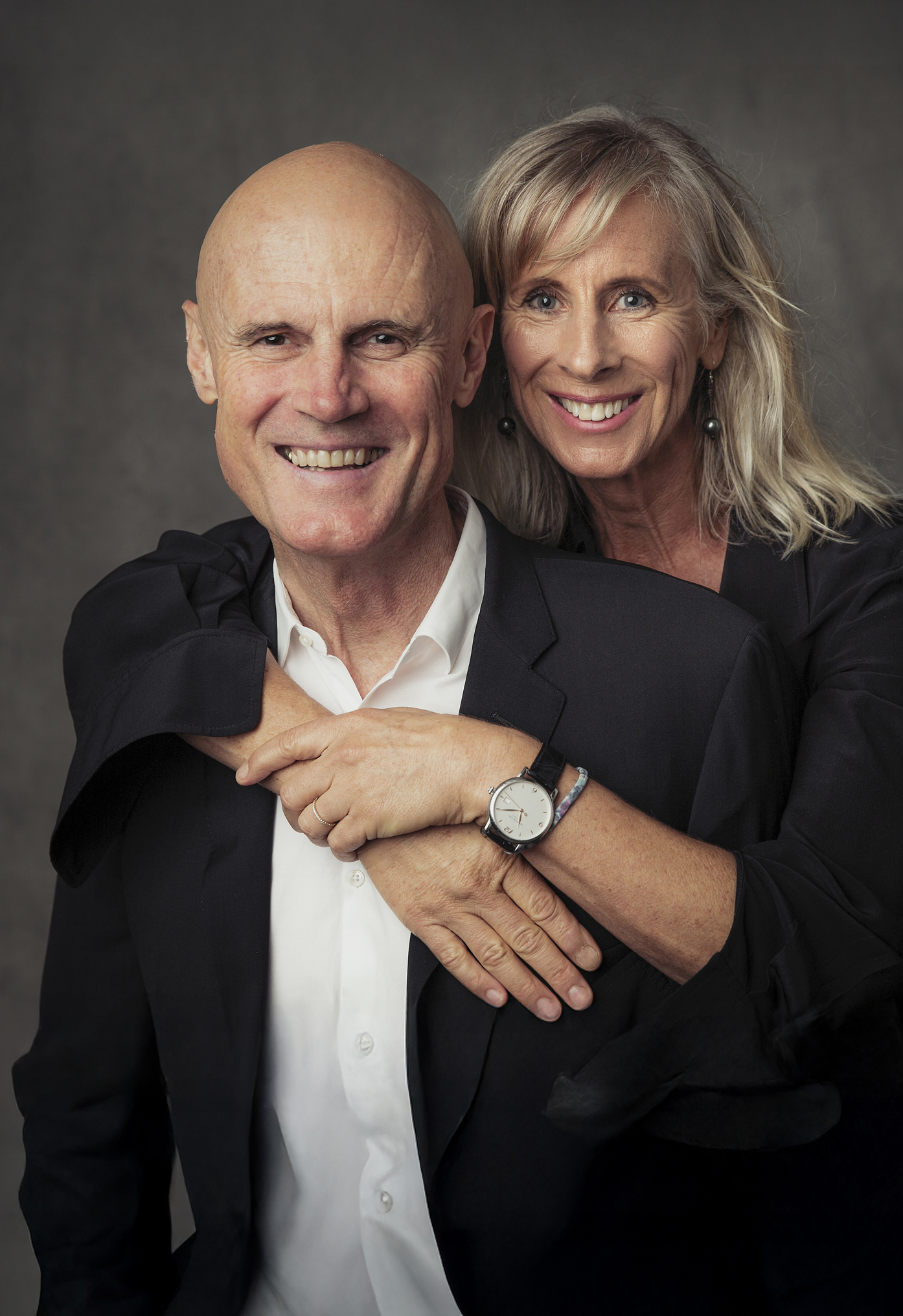
"We know it's the intervals and the musical journey that makes RPM a great way to get into exercise" – Phillip and Jackie Mills
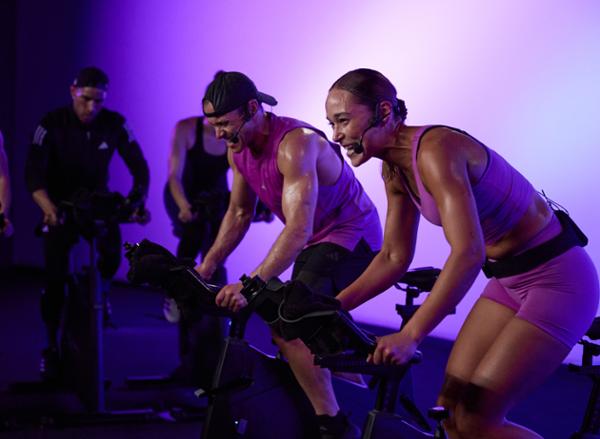
With its screen and sound system, the workout takes motivation and energy output to the next level.
Les Mills wanted to understand whether the combined audio-visual features of The Trip enabled people to increase the intensity of their workout without noticing how hard they were pushing themselves, due to its immersive nature.
A research study found a novice group’s rate of perceived exertion – how intensely they thought they had worked out – was less doing The Trip than when doing the audio-only class, when in fact the intensity was the same, meaning the immersive qualities of The Trip enhanced their fitness experience and may assist with them keeping up with a regular exercise programme going forward.


Membership Advisor
Sports Coach
Sports Coach
Swim Teacher
Party Leader
Group Exercise Instructor - Aqua
Membership Advisor
Swim Teacher
Swim Teacher


Activity and Wellbeing Instructor
Operations Manager - Brentwood School Enterprises
Swim Teacher
GP Exercise Referral Instructor
Duty Manager

Catalogue Gallery

Company profile
Directory
Featured Supplier
Property & Tenders
Company: Lee Valley Regional Park Authority
Company: Newmark
Company: EiA Real Estate
Company: Savills
Company: University of Oxford