


Research: Massage can help muscle re-growth after an injury – even when applied to the opposite limb
A groundbreaking new study shows that massage can help muscle re-growth after an injury – even when applied to the opposite, uninjured limb. Jane Kitchen takes a closer look


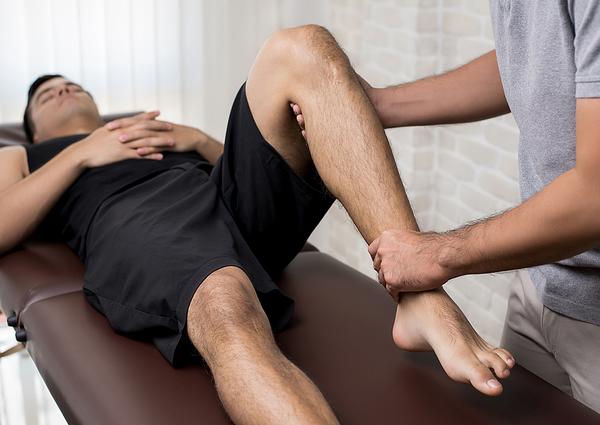
Massage has long been known in the physiology world as an easy-to-use treatment with very few side effects, which can also lessen pain, decrease anxiety and stress, increase flexibility, improve immunity and increase blood flow. But its value for muscle regeneration has also now been demonstrated, and researchers from Colorado State University (CSU) and the University of Kentucky have found some surprising new benefits with important implications for healing.
The researchers have shown that massage can increase the re-growth of muscle tissue after an injury – even when applied to the opposite, uninjured limb. Their paper, published in November in The Journal of Physiology, showed that muscle grew faster after a massage because the making of protein in cells was improved. They also showed that when one leg was massaged, the muscle in the other, non-massaged leg also grew faster.
This has implications for people on bed rest, the elderly or those having a prolonged hospital stay, as muscle is lost quickly during periods of disuse and is difficult to grow back – especially in the elderly. Karyn Hamilton and Ben Miller, faculty members of CSU’s Department of Health and Exercise Science and authors on the paper, say the concept that massaging one limb might also lead to benefits in another non-massaged limb is groundbreaking.
“For instance, if you injured one leg and couldn’t massage it because of that injury, we now have evidence suggesting that massaging the other non-injured leg could lead to benefits in the injured leg,” says Hamilton. “That’s a novel finding with potentially very important implications.”
The researchers used rats that underwent a period of inactivity to decrease muscle mass, then were allowed to recover. During the recovery period, the rats were massaged every other day, and the researchers analysed the muscle for the size of muscle fibres, making of proteins, presence of other cells and communication in the cells that programmes them to grow.
The research team is beginning studies with human participants, and hopes to find similar implications.
“We foresee that massage could be used in situations where other treatments, such as exercise, can’t be applied: in the intensive care unit and in patients who are under non-weight-bearing orders after orthopaedic surgeries,” says Esther Dupont-Versteegden, one of the investigators at the University of Kentucky’s College of Health Sciences.


Swim Teacher
Swim Teacher
Fitness Manager
Operations Manager
Contract Sales Manager
Membership Advisor
Recreation Assistant/Lifeguard (NPLQ required)
Team Leader
General Manager


General Manager
Swim Manager
Sports Coach
Sports Coach
Swim Teacher
Group Exercise Instructor - Aqua
Swim Teacher
Swim Teacher
Activity and Wellbeing Instructor
Swim Teacher
GP Exercise Referral Instructor
Duty Manager

Catalogue Gallery


Company profile

Directory
Featured Supplier

Property & Tenders
Company: Lee Valley Regional Park Authority
Company: Newmark
Company: EiA Real Estate
Company: Savills
Company: University of Oxford