




Interview: Paul Hawco
With Banyan Group welcoming its 100th resort this year and reporting a 16 per cent revenue increase, Katie Barnes talks to the man heading up wellbeing about the value it adds


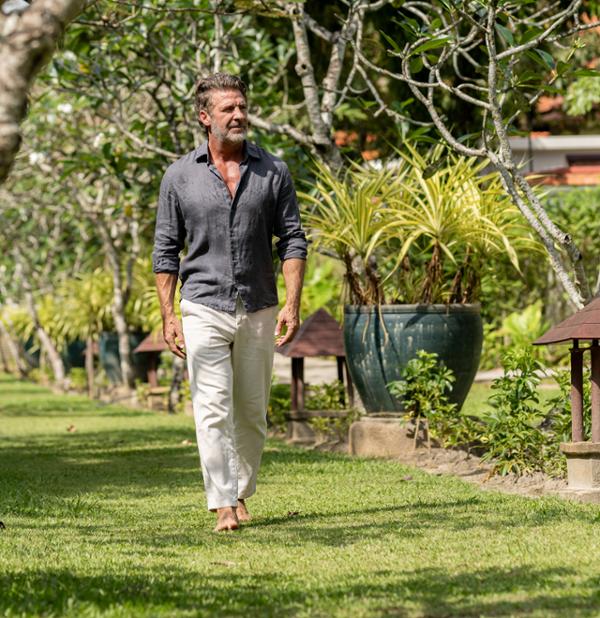
The latest financials are just in for Banyan Tree Holdings Ltd. Listed on the Singapore stock exchange, it reported robust operating profits of SGD103.2 million (US$77.5 million, €71 million, £60 million) for the full year ending 2024, driven by a 16 per cent increase in revenue in all segments.
The global hospitality company, which has rebranded as Banyan Group, hailed 2024 as “a landmark 30th year”, yet it’s already charging ahead in 2025. “We’re now in our next chapter of growth and innovation,” says president and CEO Eddy See, revealing it will open its 100th resort this year.
As of February 2025, Banyan Group boasts 72 spas worldwide and its spa, wellbeing and gallery (retail) operations generated SGD9.8 million (US$7.33 million, €6.79 million, £5.98 million) in 2024 – a 14 per cent increase on the previous year’s SGD8.6 million (US$6.46 million, €5.92 million, £5 million).
“Wellbeing is not an afterthought, a fad or a trend for us – it’s embedded in our culture and at the forefront of what we do,” Paul Hawco tells Spa Business. As a testament to this, the seasoned spa professional has been brought on board to lead the strategic vision and execution of Banyan’s wellbeing portfolio. But how did he get into the industry and what are his goals for the company?
A career of passion
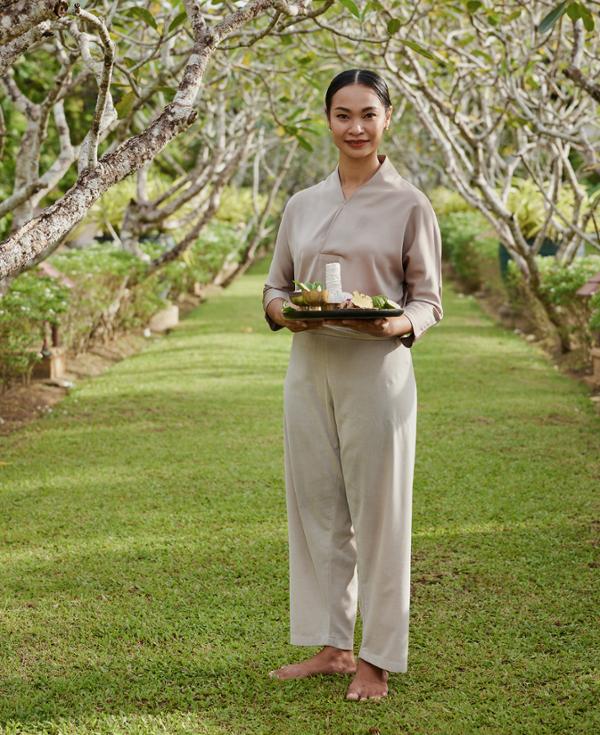
With a background in personal training and therapy – including highly regarded qualifications from his home country of Canada – Hawco has been in the wellness industry for nearly three decades. He started as a spa therapist at Fairmont, honing his skills across North America before eventually taking on global corporate wellbeing roles for hoteliers such as Jumeirah in the UAE and Rosewood in Asia.
“Wellbeing is at the centre of my lifestyle, so it’s incredible to marry this passion with my career,” says Hawco, believing that all avenues in his career thus far led him to join the Banyan Group in May 2024. It was a mindful onboarding experience, he recalls, recounting a six-stage interview process with HR and multiple members of the family-run business including co-founders Ho Kwon Ping and Claire Chiang and their daughter, deputy CEO, Ho Ren Yung who are all involved in the company.
Spas have always been a key differentiator for Banyan Group and Hawco will continue to steer them, as well as its dedicated training academy, in his role as executive director of integrated wellbeing. However, his responsibilities also include overseeing wider and numerous other wellbeing initiatives, programmes and experiences for guests on the property, when they leave and also for associates.
He explains: “It doesn’t say ‘spa’ in my title, it says ‘integrated’. While I’m responsible for all our spas and work closely with all my spa operations colleagues, wellbeing is embedded in our DNA end to end.”
Pushing forward
So what does that mean on the ground? “Our award-winning spa brands contribute to the overall positioning of our hotels and resorts, they’re also the anchor of our wellbeing philosophy,” says Hawco, who has some clear business objectives in mind for them.
One is to raise the capture rates of spas as well as increasing average treatment spend in the next two to four years. Another long-term goal is to grow Banyan’s spa portfolio with more standalone and third-party management contracts – out of its 72 spas, only nine sit outside its hotels.
In an increasingly competitive wellness hotel landscape, Hawco says it’s also about pushing forward with innovations. “This year will see multiple projects and touchpoints that will amplify our commitment to wellbeing.”
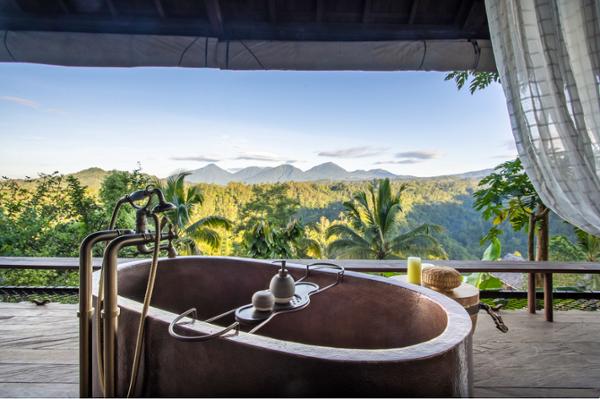
The first phase has already started with investments in visiting practitioner programmes and experiences of various themes and formats. It introduced seven retreats last year, including the Women’s Retreat at Buahan, a Banyan Tree Escape in Bali. “These are designed to foster a global community of wellbeing enthusiasts and like-minded individuals who share a commitment to personal growth and fulfilment,” Hawco says.
Soon-to-be-announced enhancements for the flagship Banyan Tree Spa (and hotel) brand are also on the cards, but for the moment Hawco remains tight-lipped. He does, however, confirm a continued focus on two other core Banyan Tree concepts – Wellbeing Sanctuary and Veya.
The Banyan Tree Wellbeing Sanctuary is a villa category with additional wellness elements such as personalised activities, spa treatments and curated dining that also enables guests to enjoy broader resort offerings (see www.spabusiness.com/btsanctuary). Launched in 2020, the villas have rolled out over 20 select hotels and Hawco says they’ll remain a signature product.
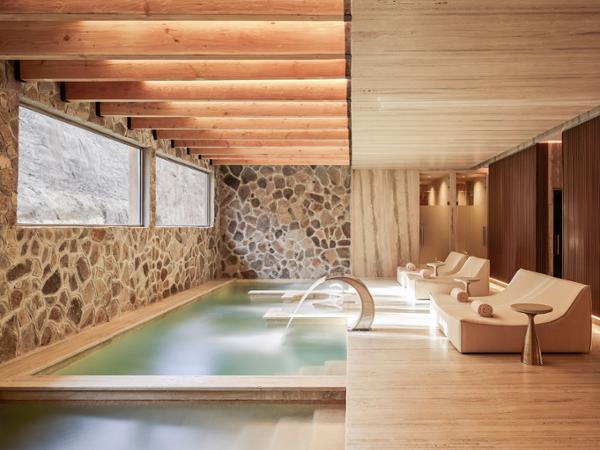
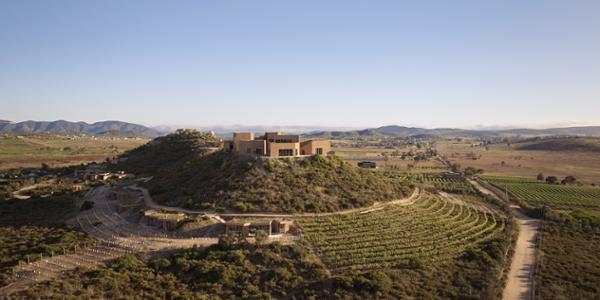
Banyan Tree Veya is a new hotel brand in the group’s portfolio which is fully dedicated to wellbeing (see www.spabusiness.com/veya). The boutique properties offer comprehensive, multi-day wellness experiences with specialised facilities and programming. The concept was trialled and tweaked at Banyan Tree Phuket, with the first official Banyan Tree Veya opening in Valle de Guadalupe, Mexico in 2024. “More locations are in our pipeline as part of our strategic expansion,” Hawco reveals.
Micro rituals
With the first phase of upping the wellness ante mostly targeting spas, the next stage is enhancing the wellbeing-centric guest journey throughout hotels and the entire portfolio. This is based on its 8 Pillars of Wellbeing (see p47) and sees Hawco drawing on the expertise of a wide range of stakeholders across the company – including the gallery (retail) unit. Gallery runs as a separate business and focuses on selling Banyan Tree Essentials, an in-house natural, aromatherapy-based line comprising more than 300 SKUs. The 67 gallery outlets (in and outside of spas) and a revamped e-commerce platform generate upwards of SGD6 million (US$4.5 million, €4.2 million, £3.5 million) annually and last year had a 15 per cent increase in the number of orders and a 10 per cent rise in average transaction spend.
Wellness touchpoints he’s introducing across the hotel aren’t necessarily big things, he explains, but intangible micro rituals which add up to make a difference. “You can measure capture rates and footfall,” Hawco says, “but you can’t necessarily measure something that has an emotional impact, even though that can drive guest loyalty.”
He gives an example of receptionists inviting guests to inhale essential oils on arrival: “It’s like stepping into a portal where you leave the chaos of the tuk-tuk and travel behind you”. Meanwhile, guests staying in a Wellbeing Sanctuary villa are given a Wellbeing Passport to document their activities. In return for their engagement, they’re rewarded with complimentary treatments and more experiences.
“When you go to a hotel, you expect to be inspired and learn something new,” says Hawco, revealing a particularly exciting innovation he’s working on. Driven by Ho Kwon Ping’s deep passion for the Japanese bathing culture, Banyan Group is looking to transform guest bathrooms into onsen experiences. This will be relatively straightforward in new properties in Korea, Japan and China located around hot springs. Where there’s not a natural source, magnesium, sulphates and other minerals will be pumped into the water in all rooms. On top of this, will be local herbs and ingredients that can be added and guided breathwork rituals.
Beyond the hotel
For Banyan Group and Hawco, however, wellbeing stretches even further than a hotel stay – homing in on both associates and reaching out to consumers directly.
The group recognised the importance of employee training early doors, launching the Banyan Tree Spa Academy in 2001 with certifications acknowledged by Thailand’s public health and education ministries. While traditionally focusing on therapist skills, it rebranded last year as Banyan Spa & Wellbeing Academy with a renewed focus on holistic wellbeing practices.
The academy is now looking to add emotional resilience training to the mix. Not just for therapists but also for front-of-house staff. “This isn’t just about positivity and stress relief, or teaching them how to breathe or stretch,” says Hawco. “We’re teaching them how to be emotionally confident too, how to address guests – refining the luxury experience through wellbeing.”
Last year, it unveiled Nature House, a purpose-built learning space in Banyan Tree Phuket which sees it educating guests and members of the general public directly for the first time in its 24-year history. Classes range from teaching basic reflexology techniques and face yoga to herbal workshops and cooking lessons.
“This is all in alignment with our wider wellbeing proposition of empowering people to embark on personalised journeys of self-discovery and growth,” says Hawco. It keeps the brand front of mind too and ultimately drives repeat business, he adds.
Singapore homecoming
Today, there are 12 brands in the Banyan Group portfolio (see above), with Banyan Tree and Angsana having the strongest spa concepts and Banyan Tree Veya and Garrya notably focusing on wellbeing. It has 11 projects in the pipeline for 2025 and by the end of the year, it will boast more than 100 properties. Just like choosing a favourite child, however, Hawco is reluctant to single one out. “I’m equally excited about all of our new openings!” he declares.
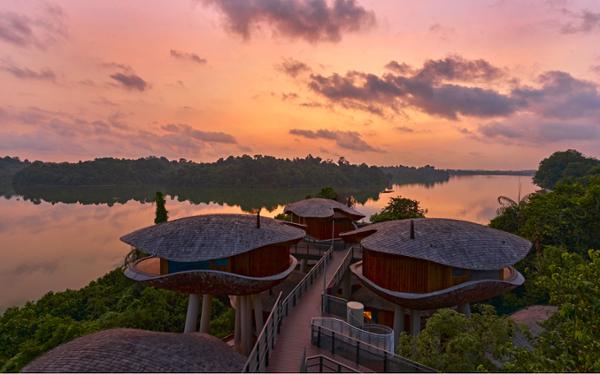
One of the most significant is certainly the Mandai Rainforest Resort by Banyan Tree, its inaugural site in Singapore – where the company is headquartered. Set to open for stays from April, the 338-room resort is nestled in the Mandai Wildlife Reserve and will offer a nature-inspired stay where the architecture and interiors blend with the environment. The spa, says Hawco, will be “an intimate sanctuary with a range of spa pavilions and suites”.
Other firsts include Ubuyu, a Banyan Tree Escape, a safari resort in Tanzania and Cassia Punta Cana, the group’s debut resort in the Dominican Republic coming at a later point.
To keep up with growth, Hawco hints at additional training academies. It already has the main campus in Phuket and offers online courses, but it’s looking to expand its presence internationally. “Having highly trained therapists who embody our wellbeing philosophy is crucial to providing the service excellence guests expect,” he says. “And the academy’s support is integral to the growth and success of our spa brands.”
As the company forges ahead, diversification is a priority and it’s pinpointing significant growth opportunities in the Middle East and increasingly North America. That said, Asia remains pivotal, with countries such as China and Japan experiencing a resurgence in luxury tourism, particularly among younger, affluent travellers. This is an audience which values authenticity, eco-consciousness and experiences more than ever – precisely what Banyan Group can offer.
Hawco concludes: “As the notion of wellbeing becomes increasingly integrated into our everyday lives, it’s such an exciting time to be in this space. There’s so much more to be done … and I look forward to it all.”
Treatment: Turkish hammam
Spa: Aire Ancient Baths
Film: Any inspired by true life stories
Book: Sapiens: A Brief History of Humankind, by Yuval Noah Harari
Place: Canada
Season: Autumn
Advice: My father says ‘always apply yourself to whatever you’re doing, be it a mundane task or your career’
Who do you admire? Any entrepreneur – it’s a brave role to play
• Growth
• Practice
• Connection
• Nourishment
• Movement
• Groundedness
• Rest
• Mindfulness
Angsana
Angsana Heritage Collection
Banyan Tree
Banyan Tree Escape
Banyan Tree Veya
Cassia
Dhawa
Folio
Garrya
Homm
Laguna
Skypark




Community Activator Coach Apprentice
Membership Advisor
Customer Service Advisor
GP Exercise Referral Instructor
Swim Manager
Food and Beverage Manager
Activity and Wellbeing Coordinator
Membership Advisor
Food & Beverage Assistant



Catalogue Gallery



Company profile

Directory
Featured Supplier
Property & Tenders
Company: Lee Valley Regional Park Authority
Company: Newmark
Company: EiA Real Estate
Company: Savills
Company: University of Oxford