
















Architects to create public park in centre of one of Mexico City’s busiest roads


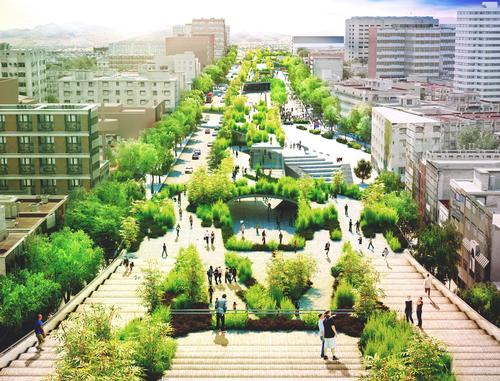
Fernando Romero and two other Mexican architects have unveiled plans to transform Mexico City's Avenida Chapultepec into a public park, linking it back to its pre-Hispanic origins.
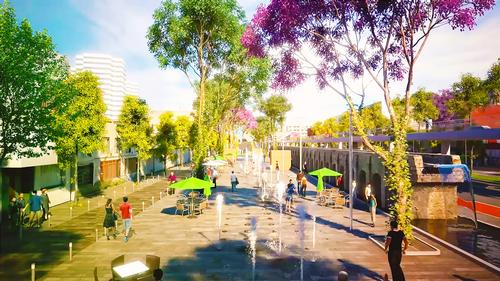
Romero's studio FR-EE is working with FRENTE and RVDG on the transformation of a busy ten-lane road that runs west to east between Chapultepec Park and the city centre. Featuring café plazas, a raised promenade, trees and water features, the aim is to give back Avenida Chapultepec to pedestrians and alternative vehicles.
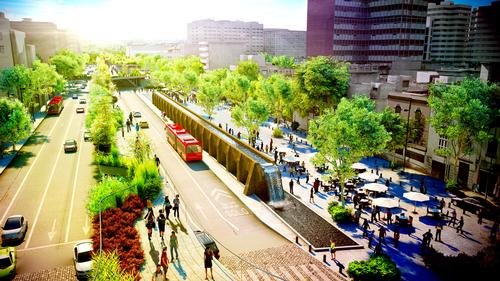
Named Cultural Corridor Chapultepec, the proposed design sees cars relegated to the sides of the road, freeing up space in the centre for public space and other modes of transport. A raised landscape will also be introduced, creating shops and an elevated promenade.
The architects see the Cultural Corridor Chapultepec project as an opportunity to give the historic street back to the people, transforming its context by recovering its history. It will extend for 1.3km (0.8 miles) between the park and the Glorieta de los Insurgentes roundabout.
Corredor Cultural Chapultepec (FR-EE / FRENTE / RVDG) from FR-EE Fernando Romero Enterprise on Vimeo.
The main promenade will run along the centre of the avenue at street level. Specific lanes for bikes, skaters, wheelchairs and pushchairs will be built and pedestrian crosswalks have been strategically designed to access the central space from the sidewalks to avoid accidents. Terraces and water features will be created alongside the 18th-century viaduct arches, while local trees and plants will provide shade, mitigating the heat island effect common to urban areas.
“This project will organise the surroundings, will double the green areas, will enhance connectivity and will celebrate the cultural diversity of the city,” said Fernando Romero, general director of FR-EE.
Earliest records date Avenida Chapultepec back to the early 16th century, but it is also believed to follow the path of a pre-Hispanic road that connected the city with the home of the Aztec emperors. An aquaduct was built along the road in the 18th century and the first tram ran along the street in 1900. In 1972 the city's first subway opened underneath it.



General Manager
General Manager
Swim Manager
Membership Advisor
Sports Coach
Sports Coach
Swim Teacher
Party Leader
Group Exercise Instructor - Aqua


Membership Advisor
Swim Teacher
Swim Teacher
Activity and Wellbeing Instructor
Operations Manager - Brentwood School Enterprises
Swim Teacher
GP Exercise Referral Instructor
Duty Manager




Company profile

Directory
Featured Supplier
Property & Tenders
Company: Lee Valley Regional Park Authority
Company: Newmark
Company: EiA Real Estate
Company: Savills
Company: University of Oxford