












Global wellness real estate market is worth US$876 billion, says GWI


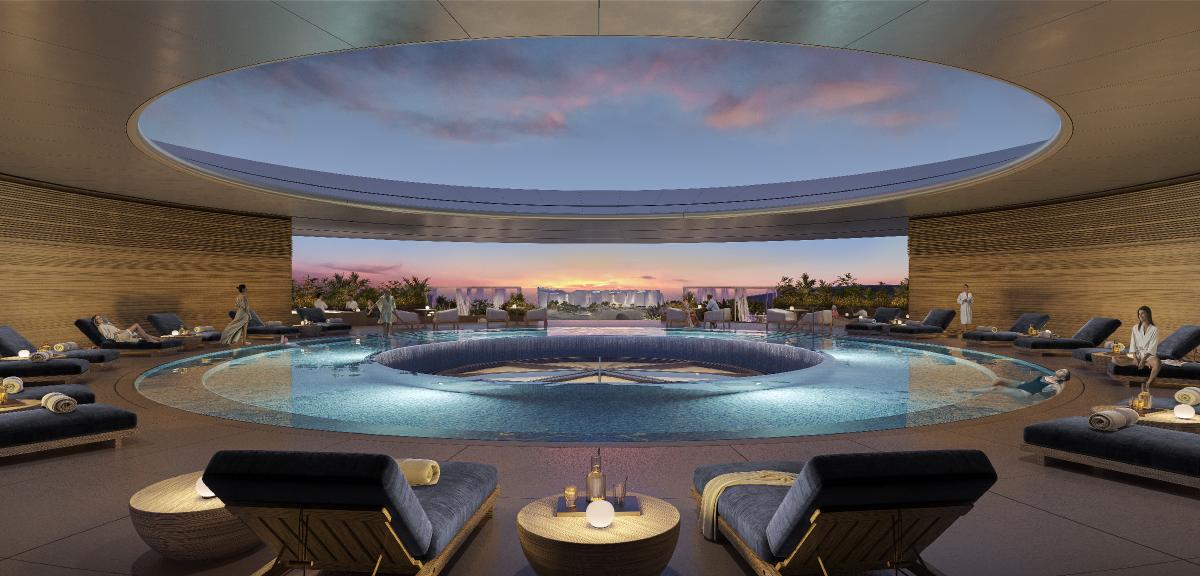
The wellness real estate market remains the fastest-growing wellness sector, according to new research by the Global Wellness Institute (GWI), revealed today at the Global Wellness Summit’s Wellness Real Estate and Communities Symposium in New York City.
The figures offer a preview of the full update inside the 2026 Wellness Economy Monitor, which will be released this November at the Global Wellness Summit (GWS) in Phuket, Thailand.
The GWI defines wellness real estate as “built environments proactively designed, built and operated to support the holistic health of occupants, visitors and the community.”
The global wellness real estate market has expanded from US$151 billion (€139 billion, £118 billion) in 2017 to US$876 billion (€805 billion, £683 billion) in 2025.
It is expected to reach US$1 trillion (€920 billion, £780 billion) for the first time in 2027 and will expand, on average, by 15 per cent annually from 2025 to reach US$1.8 trillion (€1.7 trillion, £1.4 trillion) by 2030.
The three largest national markets are:
- The US – US$254 billion (€234 billion, £198 billion)
- China – US$218 billion (€201 billion, £170 billion)
- The UK – US$51 billion (€47 billion, £40 billion)
National markets that saw the biggest annual growth gains from 2019 to 2025 are Italy (50 per cent), Spain (46 per cent), and Saudi Arabia (34 per cent).
Build Well to Live Well: Case Studies, Volume 2
The GWI also published a report about eight wellness real estate projects in Saudi Arabia and the UAE called Build Well to Live Well: Case Studies, Volume 2. This research showed that Saudi Arabia’s annual real estate market growth between 2017 and 2025 was 85 per cent, which the GWI says is the highest growth rate in the world. Over the same period, the UAE’s real estate market grew by 21 per cent annually.
For both countries, wellness real estate now represents more than 12 per cent of all construction, and the two countries have more than 555,000 wellness-focused residential units in the pipeline, according to the GWI. The projects often encompass between 1,500 and more than 150,000 residences.
The GWI says one of the reasons the region’s wellness real estate sector growth is so distinctive is that it is fuelled by enormous government investment.
Katherine Johnson and Ophelia Yeung, GWI senior research fellows, said: "These exemplary projects show how wellness real estate can be created at scale, while putting sustainability, placemaking and inclusivity at the centre of their design, construction and operation. The wellness benefits to their communities will be vast."
Some of the projects examined include:
- Wellness tourism destination Amaala Triple Bay, Red Sea Region in Saudi Arabia;
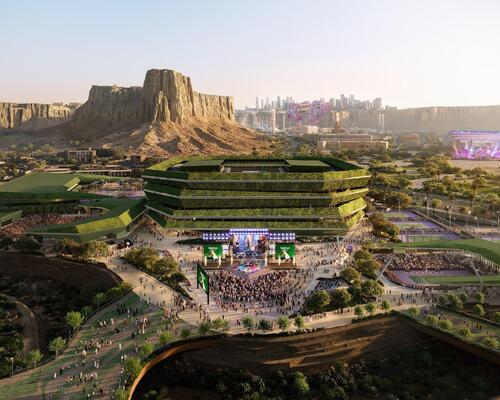
- An urban regeneration project called Sports Boulevard in Riyadh, Saudi Arabia, with the world’s largest linear park (84 miles long).
- The Sustainable City of Yas Island, Abu Dhabi, UAE – a mixed-use 99-acre community
- Expo City Dubai, UAE, which is a mixed-use wellness-focused 865-acre adaptive reuse project with 74 acres of open space for 35,000 residents and 40,000 workers.
Read more about the projects in the report here.
This is the second volume of Build Well to Live Well: Case Studies from the second edition of the Build Well to Live Well report.
The first volume of case studies from the second edition of the report, which was published last year, focused on standout projects in the US and the UK. Download your free copy here.
The groundbreaking first edition of the Build Well to Live Well report, which had Mia Kyricos and Brooke Warrick as research advisors, was published in 2018.

Sports Coach
Sports Coach
Swim Teacher
Party Leader
Group Exercise Instructor - Aqua
Membership Advisor
Swim Teacher
Customer Service Advisor
Swim Teacher


Activity and Wellbeing Instructor
Operations Manager - Brentwood School Enterprises
Fitness Manager
Swim Teacher
GP Exercise Referral Instructor
Duty Manager
Duty Manager
Community Activator Coach Apprentice



Company profile
Directory
Featured Supplier

Property & Tenders
Company: Lee Valley Regional Park Authority
Company: Newmark
Company: EiA Real Estate
Company: Savills
Company: University of Oxford