












‘It was a whirlwind’ How did an unknown two-person firm win the world’s biggest architectural competition?


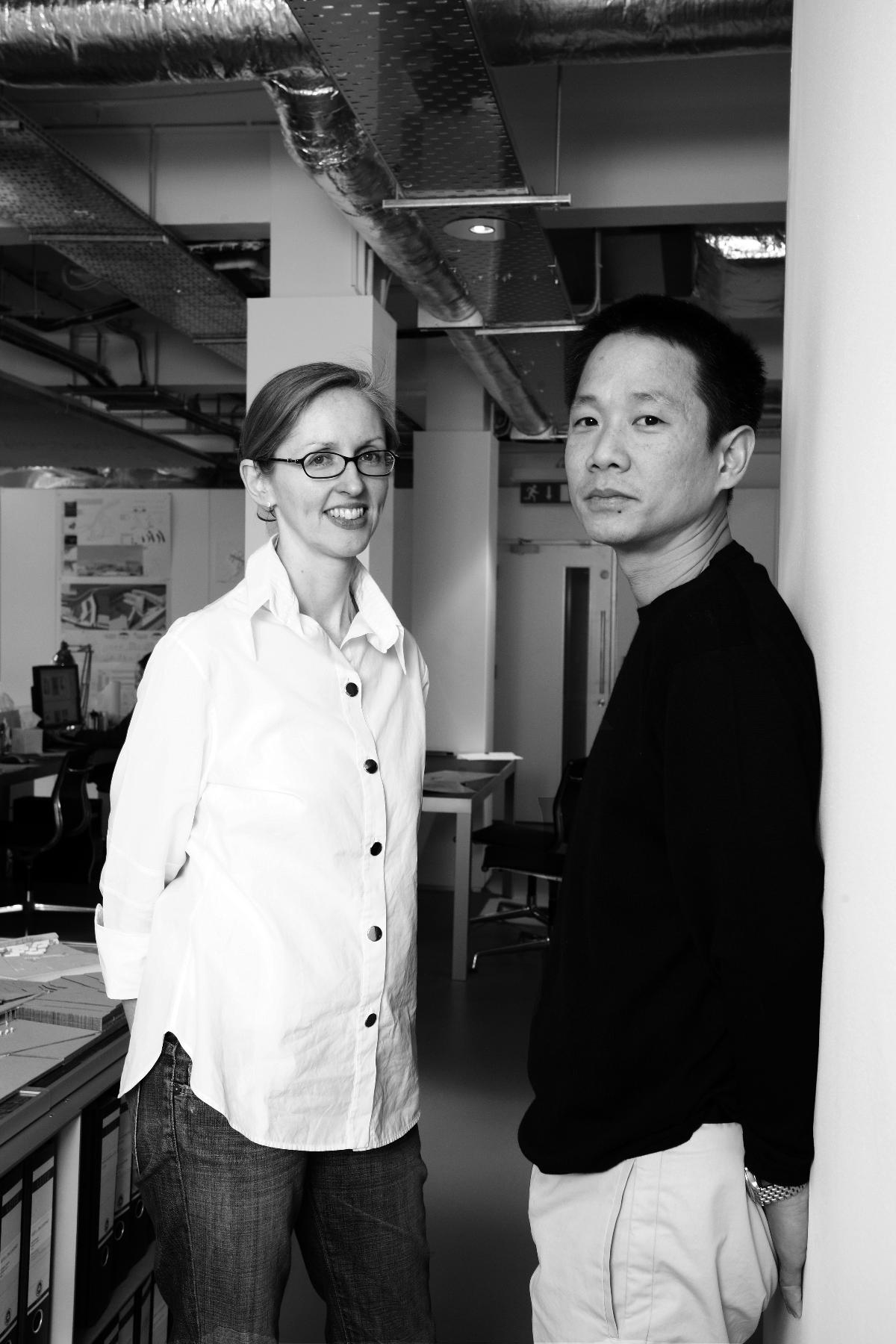
Following the long-awaited opening of the $1bn Grand Egyptian Museum, Roisin Heneghan spoke to CLADmag about the extraordinary story of how a tiny Irish firm without a single completed building to its name won the competition to design one of the world’s largest archaeological museums.
Winning the 2002 competition to design the Grand Egyptian Museum supercharged the profile of Irish design firm Heneghan Peng – founded by Heneghan and her architect husband Shih-Fu Peng just four years before. The competition attracted a massive 1,557 entries from 82 countries, with Heneghan Peng beating entries by the likes of Zaha Hadid, Will Alsop and Future Systems with their vision for an enormous triangular building designed to align geometrically with the Giza Pyramids. The judges were impressed by Heneghan Peng’s context-sensitive submission, and the way it was designed as an extension to the ancient pyramids rather than as something new to be imposed on the desert landscape.
“Our design works in dialogue with the scale and mathematical precision of the pyramids, creating a connection that aims to complement rather than compete with their stature,” said Heneghan, speaking to CLADmag. “We wanted to strengthen that connection to place, so we developed a design that works in direct relation to the positioning of the pyramids to create an experience that you could never find elsewhere.”
More than 20 years on, the building has finally become a reality. Set across a 500,000sq m site, the GEM covers 5,000 years of Egyptian history, from pre-dynastic times to the Greco-Roman era, and houses more than 100,000 artefacts. It features two galleries dedicated to King Tutankhamun, with more than 5,000 objects from the young king’s tomb together for the first time since its discovery in 1922. Other highlights include a colossal 3,200-year-old statue of Ramesses II, the 16m-tall Hanging Obelisk of Ramesses II and the 4,600-year-old Khufu funerary boat.
ONCE IN A LIFETIME PROJECT
Looking back at the impact winning the GEM commission had on the fortunes of Heneghan Peng Architects, Heneghan said: “We were just two people when we entered this competition, Shih-Fu and I. To go from being a tiny operation to winning the largest architectural competition for a built project in the world elevated us to a global level. It was a whirlwind.”
“It was a once-in-a-lifetime project, and we feel incredibly lucky to have helped bring it to life.”
The museum’s innovative translucent façade – designed by Heneghan Peng together with engineering firm Arup – is a key feature of its design. Formed of triangular panels of translucent alabaster, Egyptian limestone and glass, it filters the strong desert light into the museum’s interior spaces, creating a soft glow and protecting the artefacts.
“Most museums need a very controlled lighting setup due to the fragility of the historical artefacts, but the fact that many pieces in this collection are stone opened up the possibility to introduce natural light in a really compelling way,” said Heneghan. “It was yet another thing that made the project feel so unique and exciting to work on.”
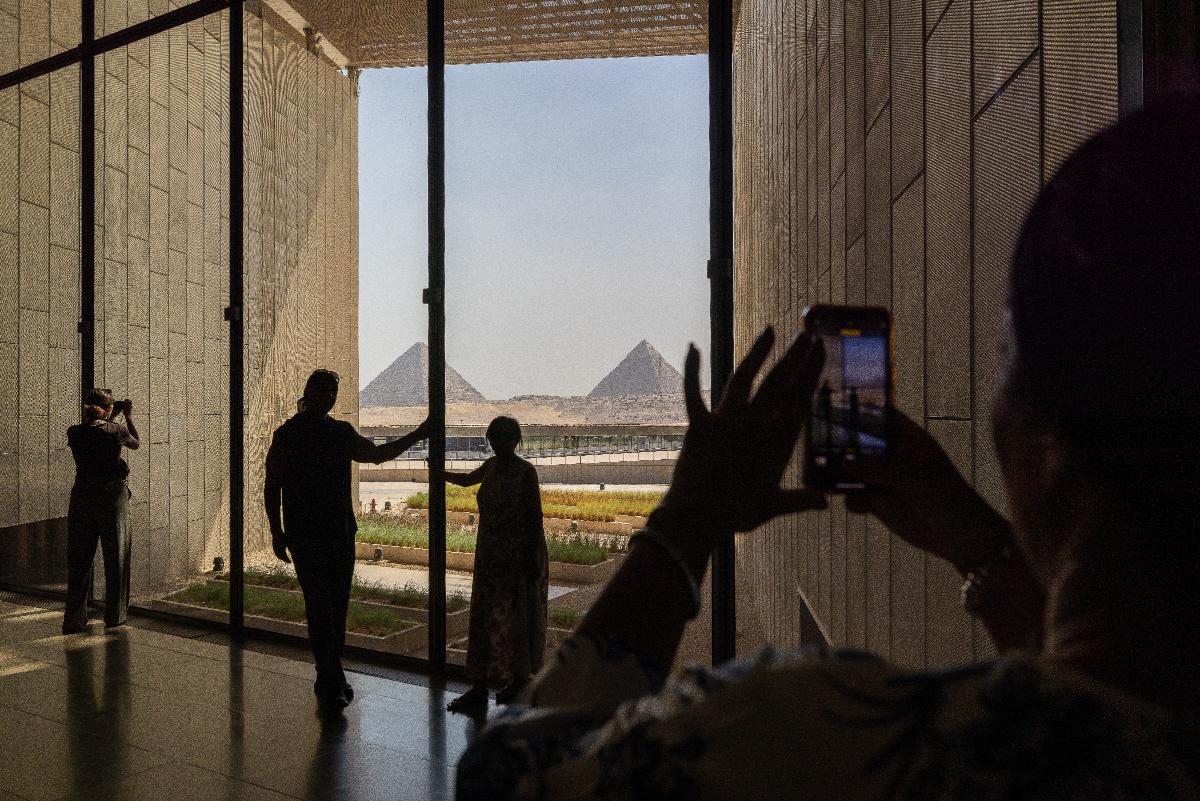
For Heneghan, the design feature she is most proud of, is the dramatic framed view of the Giza pyramids from the large windows at the top of the grand, six-storey staircase.
“It’s only once visitors have ascended the staircase that they’re able to see the view, so the idea is that they get an overview of the history of Pharaonic Egypt as they climb the stairs, which culminates in the incredible view of the pyramids,” says Heneghan. “It’s the standout design feature, for me.
“It provides a moment for reflection and contemplation, giving visitors space to process the incredible breadth of ancient Egypt’s history, and also making the pyramids feel as though they’re actually a part of the museum. Visitors can then explore the various galleries having had this historical overview.
THE START OF SOMETHING BIG
Heneghan Peng have gone on to design significant public including the Giant’s Causeway Visitor Centre in Northern Ireland (which was shortlisted for the Stirling Prize) and the Palestinian Museum in Birzeit, Palestine. They are currently working on several cultural buildings across the world.
“We’re working on the Kaiser Wilhelm Memorial Church in Berlin, Germany. It’s a hugely significant building that stands as a symbol of Berlin’s complex history and a site of reconciliation.
“We’re also working on a children’s museum in Waterford, Ireland, and have just completed work at Storm King Art Center in upstate New York – our first American project.”
As for the Grand Egyptian Museum, Heneghan says it will always hold a very special place in her heart. “We’re proud of the design we delivered, she said. “Although some of that was changed during the later phases of the project as other teams became involved, our concept and vision centered around the connection to place has remained intact.
"Our design works to strengthen that connection to history and place, providing a home for some never-before-seen artefacts that rests upon the very land from which they were created. The result is an experience that evokes a sense of awe at the breadth and depth of ancient Egypt’s fascinating history in a way that feels both modern and timeless."To read the full interview, visit: http://lei.sr/w8p2k


Sports Coach
Sports Coach
Swim Teacher
Party Leader
Group Exercise Instructor - Aqua
Membership Advisor
Swim Teacher
Customer Service Advisor
Swim Teacher


Activity and Wellbeing Instructor
Operations Manager - Brentwood School Enterprises
Swim Teacher
GP Exercise Referral Instructor
Duty Manager
Community Activator Coach Apprentice



Company profile

Directory
Featured Supplier
Property & Tenders
Company: Lee Valley Regional Park Authority
Company: Newmark
Company: EiA Real Estate
Company: Savills
Company: University of Oxford