










Japan Sports Council reveals cost of abandoning Zaha Hadid's Tokyo stadium design


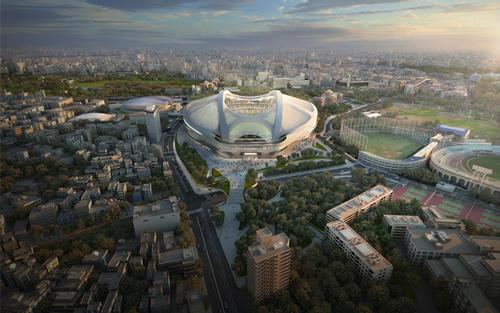
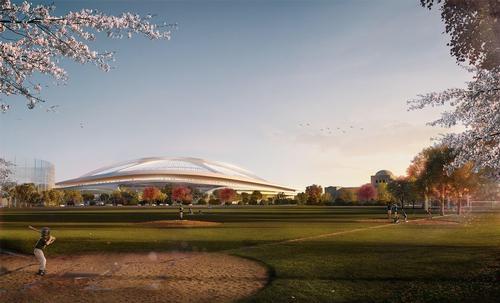
The body in charge of organising Tokyo’s Olympic Games has admitted its decision to cancel Zaha Hadid Architects’ (ZHA) National Olympic Stadium design in favour of a cheaper alternative has already cost it ¥68.6bn (US$650.6m, €582.4m, £497m) in compensation payouts.
According to media reports in the country, the Japan Sports Council (JSC) announced it has already earmarked the sum – ¥600m US$5.8m, €5.2m, £4.4m) higher than the amount estimated by the sports ministry in August 2015 – to cancel the original construction project.
The Tokyo Reporter and ANN News claim the unrecoverable figure includes a ¥1.39bn (US$13.5m, €12.1m, £10.3m) payment to ZHA to cover stadium design fees and the cost of closing their Tokyo office. Four other companies, including Japanese architects Nikken Sekkei, have received ¥3.8bn (US$37.1m, €33.2m, £28.3m) in design costs, while engineering firms Taisei Corp and Takenaka Corp have received ¥777m (US$7.6m, €6.8m, £5.8m).
It remains to be seen whether the payment will put an end to the acrimonious saga, which began when ZHA were dropped from the Olympic Stadium project, despite winning an international design competition. Prime Minister Shinzo Abe said the cost of the stadium – which had been criticised by Japanese architects including Toyo Ito and Fumihiko Maki – had “just ballooned too much” after almost doubling to US$2bn (€1.79bn, £1.52bn).
A succession of skirmishes followed, with ZHA issuing a robust defence of their design, blaming the cost increases on Japan's overheated construction market and the tendering process for the building, in which contractors were appointed before they submitted cost estimates.
"Our warning was not heeded that selecting contractors too early in a heated construction market and without sufficient competition would lead to an overly high estimate of the cost of construction,” they said.
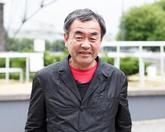
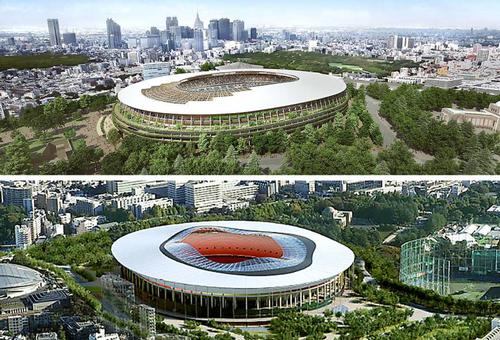
In December 2015, Kengo Kuma was selected to design the stadium within a budget of ¥155bn (US$1.5bn, €1.3bn, £1.1bn). That decision also prompted anger, with ZHA saying his design shared similarities with theirs – an accusation he has flatly denied.
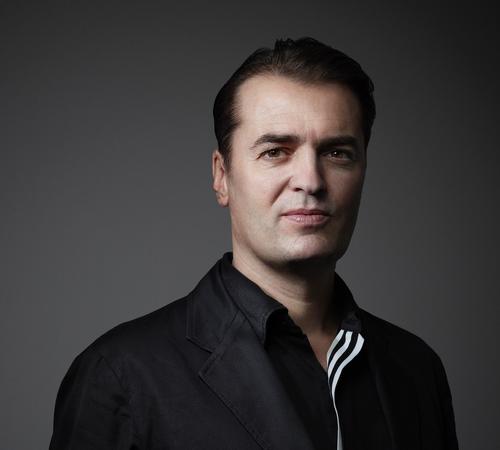
Summarising the saga in an interview with Sports Management's sister publicationCLAD, ZHA director Patrik Schumacher said: “It was the biggest setback ever. I found it absolutely shocking and Zaha was devastated. We were so happy to get that project, it was a well deserved win and we were looking forward to 2020. That was pulled away from us. We found the whole experience incredibly distressing.
“It was such a humiliation. The loss of two years intense, passionate work, not to mention the guys flying to Japan all of the time. You can only do that if you have that reward in sight.
“Everyone was depressed and demoralised, and there was also the potential shock to our reputation – the perception that this was due to our obstinacy or outrageous extravagance in terms of the design. None of this was true, but the suspicion lingers on in the minds of clients. That's why we made a PR effort to try to explain what happened and how conscientious we'd been in the process, signalling all the way through until the final decision that we were totally willing to do anything.”
Kuma told CLAD that communication problems were to blame for the controversy. “I think it’s a problem in Japan,” he said. “For foreign architects to work in Japan is not easy because the system is totally different and the language barrier exists between Japanese and the foreigners. Zaha was very much frustrated with that kind of miscommunication and I understand that difficulty.”
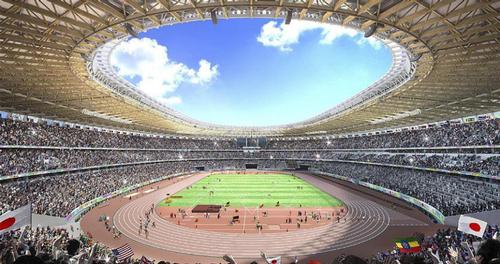
Construction on Kuma’s Olympic Stadium is set to begin in the coming months and is due to be completed by November 2019.
It will host the opening and closing ceremonies for the 2020 Games, as well as athletics, rugby and football fixtures.



Membership Advisor
Sports Coach
Sports Coach
Swim Teacher
Party Leader
Group Exercise Instructor - Aqua
Membership Advisor
Swim Teacher
Swim Teacher


Activity and Wellbeing Instructor
Operations Manager - Brentwood School Enterprises
Swim Teacher
GP Exercise Referral Instructor
Duty Manager

Catalogue Gallery



Company profile
Directory
Featured Supplier

Property & Tenders
Company: Lee Valley Regional Park Authority
Company: Newmark
Company: EiA Real Estate
Company: Savills
Company: University of Oxford