




















Neuroscience gets into the mind of the museum visitor


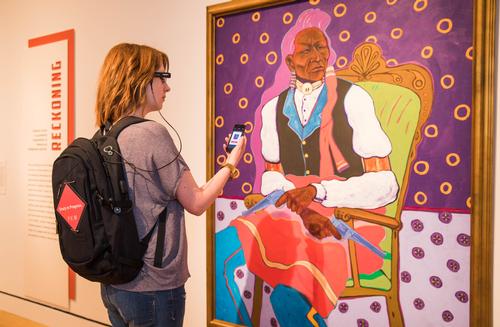

Every museum would like to know more about what goes through its visitors minds as they wander the floors looking at exhibits. How emotionally or intellectually engaged are they by an artwork? How much information about each exhibit is it optimal to provide to visitors?
Dr Tedi Asher of the Peabody Essex Museum in Massachusetts is in the process of researching exactly how these factors and others impact upon visitor experience at the Salem-based museum: in fact, she is the first neuroscientist to be based at a museum.
Speaking to Attractions Management, Asher revealed what results had been gathered from the research undertaken since her appointment in 2017, and signposted the next directions that her work will take.
One study conducted has used gaze-tracking glasses and galvanic skin response, which measures sweat produced, to gauge attention, emotion and memory. Groups were given different levels of prompts – from no prompt at all, to judgement prompts (asking if they were moved by a piece of artwork) – as they looked around a three-gallery exhibition.
The data from the research found that those who received a judgement prompt spent longer looking and had a more intense emotional experience than those who received lesser prompts or none at all. Those with prompts also moved more slowly through the exhibition.
"This supported our hypothesis that the judgement prompt would be the most effective kind of prompt in facilitating engagement, because of the brain regions which are active when we have an emotionally moving aesthetic experience," said Asher.
The study did throw out an anomaly, however – one that is as yet unexplained. In an exit survey, those in the no prompt group perceived themselves to have had a more emotional experience than any of the prompted groups – the opposite of what the biometric data suggested.
Further research studies have been planned to harness eye-tracking technology to look at how people use labels, and the intention is also to start implementing neuroscience findings into an actual exhibition. The Peabody Essex Museum plans to share its findings via a new website.
Asher says she hopes that more scientists will enter the museum community to help grow this field, and says that doing so has stretched her professionally.
"I was trained to interpret data very strictly, but in this role I'm finding there is an art to interpreting the data," she said. "It requires some imagination and extrapolation about what a particular finding could mean in the context of an art exhibition, and it's taken a while to develop that mental framework."
Peabody Essex CEO Dan Monroe believes Asher's work will benefit the whole museum community, adding: "Dr Asher's unique perspective and deep insight will enable us to make the process of art exploration and discovery especially rewarding, stimulating and fun."
For more on neuroscience and museums, see the Q3 2019 edition of Attractions Management, available now.




General Manager
General Manager
Swim Manager
Membership Advisor
Sports Coach
Sports Coach
Swim Teacher
Party Leader
Group Exercise Instructor - Aqua


Membership Advisor
Swim Teacher
Swim Teacher
Activity and Wellbeing Instructor
Operations Manager - Brentwood School Enterprises
Swim Teacher
GP Exercise Referral Instructor
Duty Manager

Catalogue Gallery



Company profile

Directory
Featured Supplier
Property & Tenders
Company: Lee Valley Regional Park Authority
Company: Newmark
Company: EiA Real Estate
Company: Savills
Company: University of Oxford