













Snøhetta's International Cave Painting Centre opens with full-size replica of famous Lascaux Cave


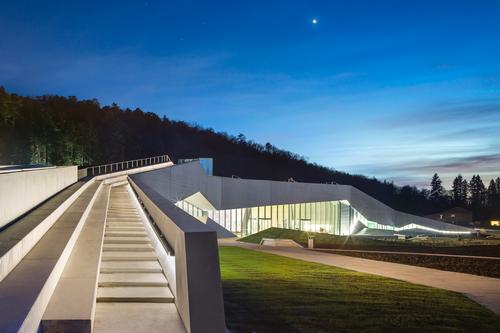
UPDATE: A dramatic new museum celebrating some of the world’s most famous prehistoric cave art has opened at the Lascaux Cave complex in France.
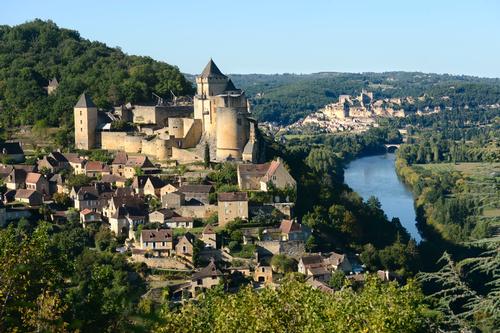
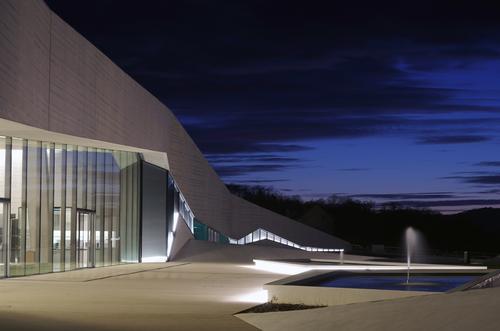
The €66m (US$70.3m, £56.2m) International Centre for Cave Art is located in the town of Montignac-sur-Vézère, at the foot of the hill where the Lascaux caves – adorned with the highest concentration of Paleolithic cave art in Europe – were discovered in 1940.
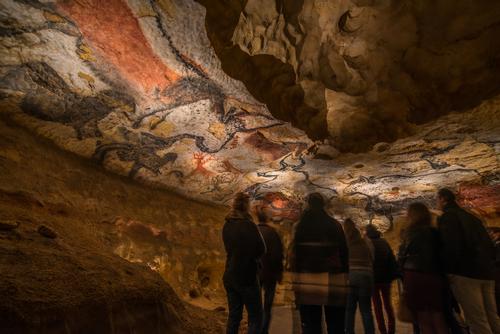
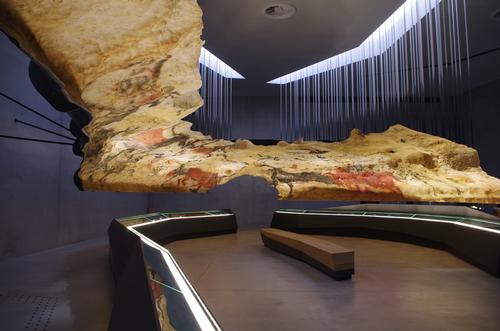
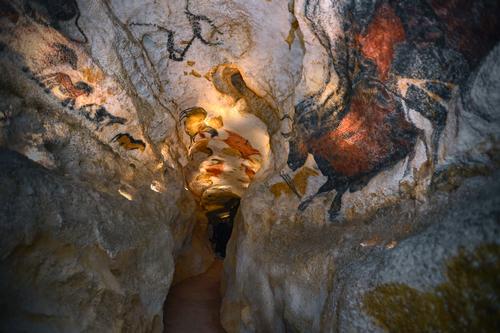
Within the new centre, designed by Norwegian architects Snøhetta and scenographers Casson Mann, is a sensorily authentic replica of the caves called Lascaux IV.
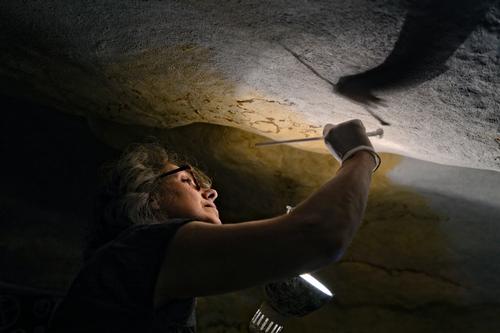
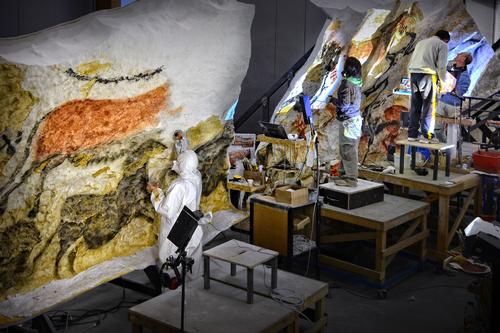
Developed through the advanced 3D laser scanning and casting technologies, and recreated to a tolerance of 1mm, the facsimile has been recreated by the Périgord Facsimile Workshop (AFSP) with the same humidity, light, sound, smell and 16°C temperature of the Unesco-protected original.
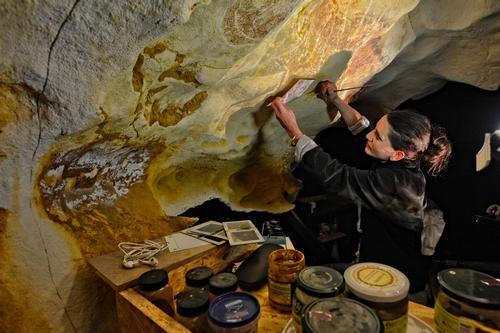
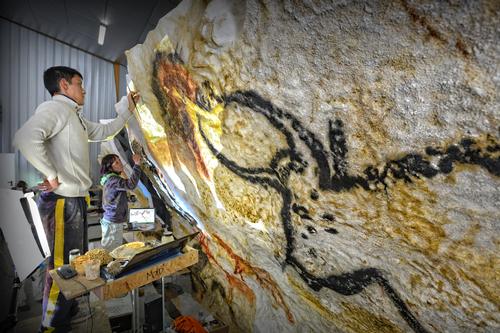
Over two years, 25 artists hand painted 900m (2,900ft) of resin rock reproductions, using the same pigments that the prehistoric painters used 20,000 years ago to recreate 1,900 paintings.
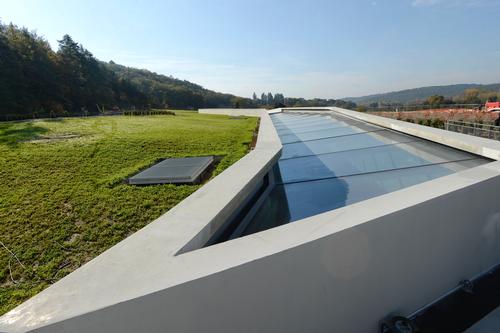
Visitors to the centre ascend from the lobby to the building’s rooftop, where there is a panoramic view of the surrounding valley. In groups of no more than 30, they then descend a gentle slope, as if retracing the steps of the four young boys who discovered the original cave, and enter the facsimile.
After journeying through the caves, they enter a bright outdoor transitional Cave Garden – the stark difference in atmosphere and light creating a juxtaposition with the underground world. They then enter four linked exhibition rooms, including a 3D theatre, which attempt explain the environmental and cultural context that paved the way for the creation of the cave art, and the techniques and equipment used to create it.
“There’s a massive amount of knowledge about Lascaux, but also many different interpretations about how it came to be and no real answers,” Casson Mann founder Roger Mann told CLAD. “Our goal then was to provide context to these questions, to move people and to give them room to explore the permutations of what they have just seen inside the facsimile.
“Despite the centre being built around a replica, the visitor experience is designed to be one of magic and authenticity.”
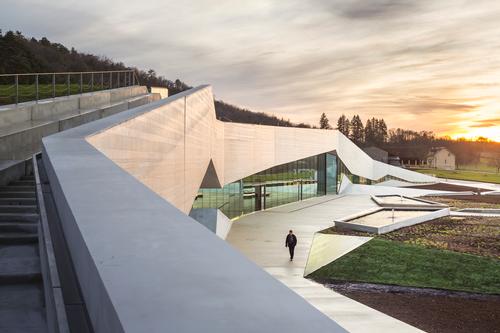
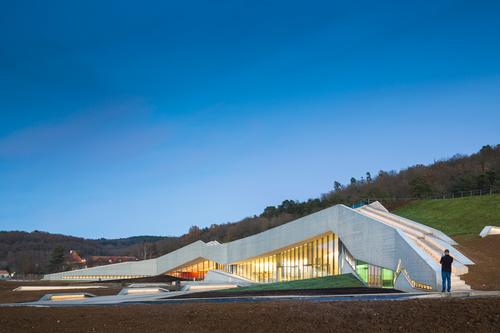
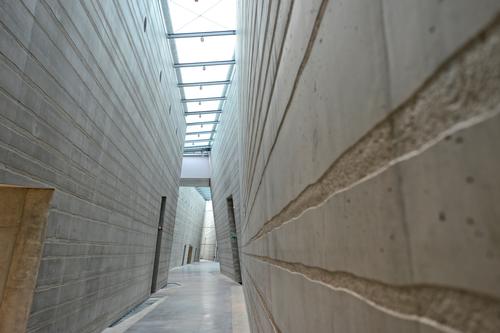
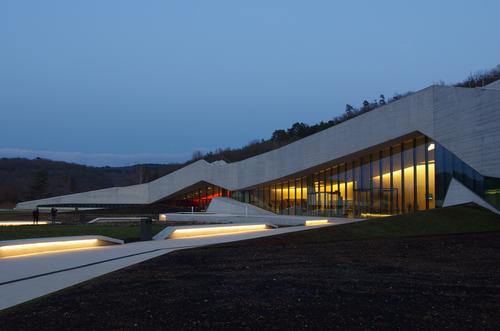
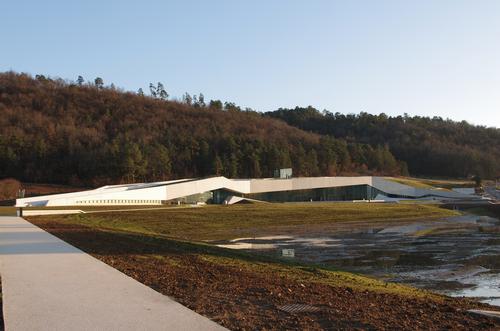
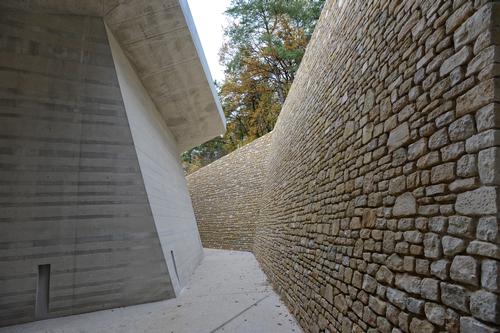
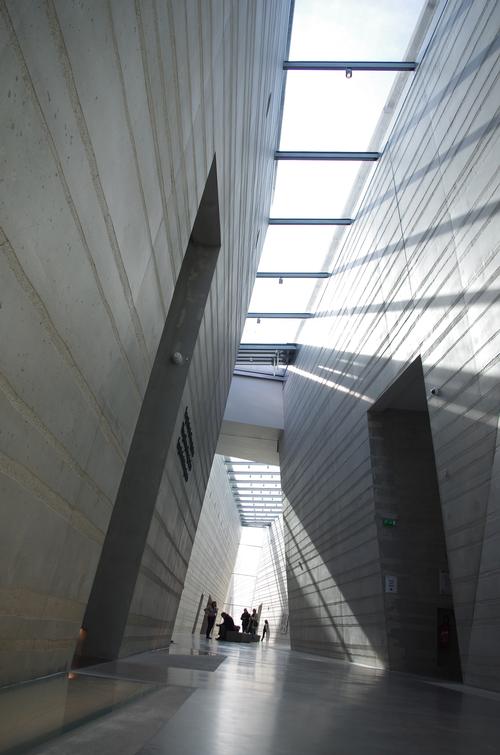
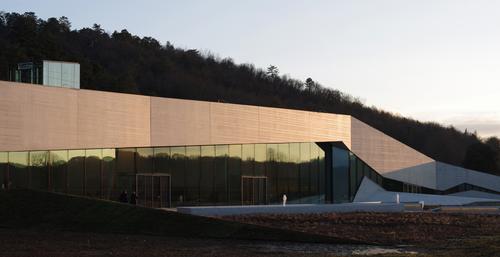
Snøhetta’s building, conceived with local firm SRA Architectes, is a low-rising glass and concrete structure designed as “an incision or a horizontal fault that accentuates the line between the surrounding valley and Lascaux hill.”
The walls, roof and interior and exterior floors use the same type of concrete to create a distinctive monolithic appearance.
“The building feels as like neither landscape or architecture,” Snøhetta founder Craig Dykers told CLAD. “It occupies space and likewise you occupy it. You walk on the roof, it feel like it’s yours and you own your experience. It is very connected to the earth we stand on, and it mediates between the municipal context of the nearby town, the agrarian landscape of the immediate surroundings and the palaeolithic cave within.”
He added that by framing the experience of the cave replica in contemporary design, the approach counters the trap of artifice. The visitor understands they are in the presence of a reproduction, without distracting from the power of its impact.
The International Centre for Cave Art complements Lascaux II – an original replica of the cave that opened in 1983 near the original – and prevents that attraction from becoming overcrowded.
There is also a Lascaux III – an 800sq m (8,600sq ft) mobile replica of the cave created by AFSP that is taken around the world.
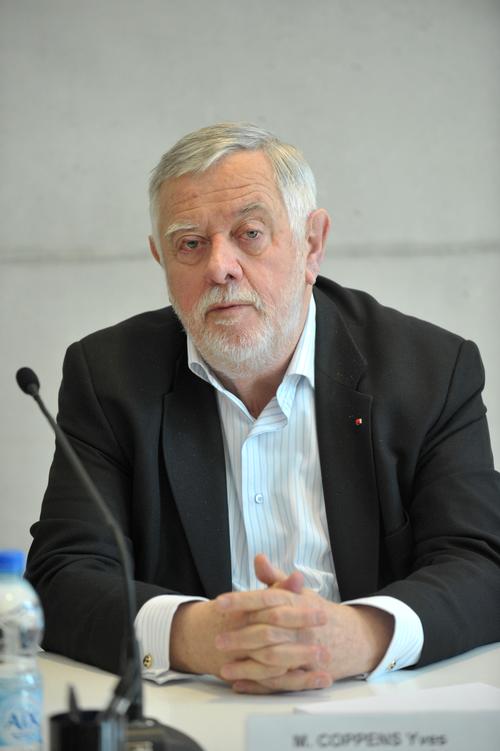
Yves Coppens, president of the Scientific Advisory Board in charge of conserving Lascaux Cave, on the creation of a full-size replica
“The public has a right to figure out what the whole cave looks like. Creating the replica was a matter of honesty. [Lascaux Cave] is a whole entity which can only be grasped if visitors have a reproduction of the whole cave before their eyes.
“Can you imagine a reproduction of the Sistine Chapel in fragments? It would be interesting for an art history lecture, but certainly wouldn’t be the best way to convey the artist’s intention to create a composed, balanced work of art. That is also the case in Lascaux.
“It’s important that visitors know that for approximately 50,000 years humans, first successively, then all at the same time, have had the desire to express themselves in graphic form. They’ve had an idea to convey, a surface on which to do it, and a tool. It existed and does still exist, and it’s a good thing that we can give a wide overview of this.”

Membership Advisor
Recreation Assistant/Lifeguard (NPLQ required)
Team Leader
General Manager
General Manager
Swim Manager
Membership Advisor
Sports Coach
Sports Coach


Swim Teacher
Party Leader
Group Exercise Instructor - Aqua
Membership Advisor
Swim Teacher
Swim Teacher
Activity and Wellbeing Instructor
Operations Manager - Brentwood School Enterprises
Swim Teacher
GP Exercise Referral Instructor
Duty Manager



Company profile
Directory
Featured Supplier
Property & Tenders
Company: Lee Valley Regional Park Authority
Company: Newmark
Company: EiA Real Estate
Company: Savills
Company: University of Oxford