




















The HFA’s annual report shows the global fitness industry is resilient and poised for growth



The 2025 HFA Global Report, which looked at almost 30 markets, shows that around the world more people are joining gyms and seeing fitness as essential, despite rising living costs.
After surviving economic slowdowns and a global pandemic, the fitness industry is growing a reputation as being a long-term investment target, especially since club offerings have expanded into mental wellness, recovery and longevity. Ninety one per cent of respondents anticipate growth in 2025 and 51.3 per cent foresee membership growth.
Introducing this year’s flagship annual report, the Health & Fitness Association’s CEO and president, Liz Clark, says: “In 2024, many countries reported all-time highs in facilities, membership and penetration.
“Operators continued to invest in innovation – from AI and wearables to recovery services and strength-focused design. Public discussions around obesity, mental health and prevention increasingly included the role of fitness.”
Stand-out trends
Massive growth opportunities still exist in emerging markets where penetration rates are below 1 per cent, such as India, while developed markets are approaching or exceeding 20 per cent.
Hybrid models have become the industry standard.
Millennials and Gen Z are driving growth, while higher-income segments are dominating memberships and creating premium opportunities.
There needs to be more focus on retention, including better onboarding and engagement strategies, in order to keep the 50 per cent of new members who cancel within six months.
Corporate wellness is a significant opportunity and medical integration offers health-care partnership potential.
Consumers are showing preferences for personalisation.
Preventative health strategies being initiated by many governments offer an opportunity to elevate the fitness industry and capitalise on the messaging.
There has been a shift away from the pandemic behaviours of outdoor exercise and at-home fitness back to facilities, with a renewed appreciation for community.
Search trends reflect a growing interest in longevity and healthspan, rather than aesthetics, with consumers increasingly focused on fitness as medicine. Recovery and wellness services – such as cryotherapy and red light therapy – are becoming minimum member expectations.
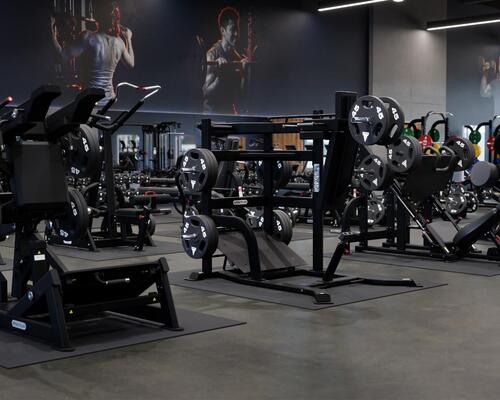
The surge in strength training has led to modern clubs allocating 42 per cent of floor space to strength training compared with 20 per cent in traditional layouts, while cardio space has decreased from 34 per cent to 12 per cent.
Pickleball is the fastest growing sport in the world, growing 223.5 per cent in the US in three years. Life Time is hoping to reach 1,000 pickleball courts by the end of 2025.
The integration of technology is another strong trend, with increasing leverage of AI for operational efficiency and enhanced member experiences, to provide personalised guidance and improve engagement. However, 47 per cent of consumers frequently encounter inaccurate or irrelevant data when using AI fitness apps, raising questions about reliability.
The fitness industry is becoming increasingly attractive to equity investors. Notable funding rounds included US$17.2 million for Myzone and US$165 million for Therabody. Planet Fitness raised $800 million in securitized financing and Equinox raised around $1.8 billion in new capital.
Investment is being driven by strong results from public companies like Planet Fitness and Life Time; the trend in longevity and healthspan and the post-COVID wellness boom, especially among younger consumers.
Challenges facing the fitness industry include inflationary pressures impacting discretionary income; rising costs of interest rates, construction and labour; supply chain issues and staffing shortages. Tariffs are also causing uncertainty in the US.
By numbers
The top 10 companies in terms of revenue were Life Time (US$2,621 million); Basic-Fit ($1,315 million); Planet Fitness ($1,200 million); RIZAP Group ($1,130 million); David Lloyd Leisure ($1,084 million); SmartFit ($1,035 million); PureGym ($773 million); RSG Group ( $482 million); SATS Group ($471 million); Fitness Park Group ($460 million).
Purpose Brands has the biggest estate in the world at 7,084 units, followed by Xponential Fitness (3,187); Planet Fitness (2,722); Curves Holdings Group (1,984); HILEFIT (1,800); RIZAP Group (1,782); Smart Fit (1,743); ZhongTian Group (1,593); Basic-Fit (1,575) and F45 Training (1,500+). The UK’s biggest operator, PureGym, came in 13th, with 680 units.
The biggest franchised brands are Anytime Fitness, Planet Fitness, Curves (Japan), F45 Training and Orangetheory Fitness.
Planet Fitness has the most members at 19.7 million. Followed by Chinese operator, HILEFIT at 14 million; Purpose Brands (5.7 million); Smart Fit Academias (4.8 million) and Basic-Fit (4.3 million).
Europe
Europe includes a mix of mature and emerging markets, reflecting stability and opportunity. The mature markets of UK, Switzerland, Germany, Austria and Spain all saw gains in 2024. European fitness companies are highly optimistic about 2025, with 90 per cent anticipating growth and half planning to expand their businesses.
The UK has the highest penetration rate in central Europe, at 16.9 per cent. Despite challenges in terms of costs, inflation and pressures on discretionary spending, all metrics are rising and the outlook is positive. With a new Labour government elected in 2024, which plans to focus on public health and economic growth, the industry is lobbying to play a key role.
For the first time, Austria overtook Germany in terms of penetration at 13.9 per cent, with the strongest growth being among the under 30s and over 50s. The sector has actively sought greater visibility in health policy debates. Personalisation and digitalisation are on the rise and the fastest growing modalities are yoga and free-weight strength training.
Germany’s penetration rose by 0.2 per cent to 13.8 per cent. Despite cost of living pressures, consumers are prioritising their wellbeing. The Employers’ Association of German Fitness and Health Facilities (DSSV) has prepared a Quality Offensive, aimed at strengthening the sector’s position as a legitimate contributor to public health.
Public awareness of health continues to rise and there is growing political recognition of fitness facilities as healthcare providers. Operators are increasingly using automation and AI to improve efficiency.
France surpassed the 10 per cent penetration mark. Momentum is being driven by the under-30s, especially women. However, there needs to be more attention paid to the over-60s who currently represent just 6 per cent of the membership and have a 40 per cent cancellation rate.
Spain reached historic highs in 2024, with membership increasing by 8.8 per cent to achieve a penetration rate of 13 per cent. It is now seen as one of Europe’s leading fitness markets and offers opportunities for operators and investors. Brands like VivaGym and Synergym both saw record expansion. Chains like Metropolitan and David Lloyd are expanding into cities such as Valencia, Seville and Bilbao and boutique studios are spreading beyond Madrid and Barcelona to mid-size cities. Rising disposable income among younger demographics has provided a boost.
Asia Pacific
Asia Pacific is a very diverse market, with World Health Organization estimating that South Asia has one of the highest rates of physical inactivity in the world at 48 per cent, while Oceania has the lowest at 14 per cent.
Australia’s penetration is around 23 per cent. According to AusPlay, 48 per cent of Australians over the age of 15 are active at least three times a week. There is a growing awareness of the importance of strength training, especially among older demographics.
New Zealand also has a strong penetration of 21 per cent. However, the economy presented considerable headwinds in 2024 with inflation higher than comparable countries and economic growth rates low. Many fitness operators adapted with leaner operations and more targeted offerings.
While demand among older adults is increasing, participation rates have stagnated among younger people. There are also significant health inequalities among the Māori, Pacific and rural communities, which are placing a burden on the public health system.
In China, there has been a shift away from long-term, pre-paid memberships towards affordable and flexible models. Outdoor fitness alternatives offering free or low cost access and community engagement are popular, putting pressure on gyms to justify their pricing, improve services and innovate. The ageing population offers a growth opportunity for elderly-focused fitness services.
India has a penetration rate of just 0.8 per cent, but demand is growing rapidly and the government is pushing a more fitness-conscious culture with its Fit India Movement. Market leader Curefit – the parent company of cult.fit, Fitness First India and Gold’s Gym India – says that the lux and boutique segments are growing the fastest, driven by a rising class of affluent, fitness-conscious Indians.
Pilates is on the rise in Japan and the most promising segment is the new generation of 24-hour, self-service gyms. Consolidation and M&A activity is expected, along with new entrants and the launch of smaller, concept-led facilities.
Latin America
Latin America offers untapped potential: the industry is fragmented and most facilities still use cash to collect memberships. It is dominated by homegrown brands, with Smart Fit the market leader with 4.8 million members across 15 countries and currently preparing to open its first club outside the region, in Morocco.
The fundamentals are strong with growing health awareness, increasing demand and a consumer willingness to invest in wellbeing, even amid economic constraints. The report says that to thrive, gym operators will need to embrace technology and improve the member and employee experience.
The Middle East
With favourable economic conditions, government-backed health initiatives and growing consumer appetite for wellness, the Middle East shows significant potential.
According to WHO, the region has some of the world’s highest inactivity rates, however, there is a rising consumer interest in fitness, especially in Saudi Arabia and UAE.
The major players are Leejam/Fitness Time, Holmes Place, Kun Sports, Saudi Sports Club Company, Gymnation, Armah Sports Company and Trifit.
Some UK and US operators have entered the market, including 9Round, F45 Training, UFC Gyms, Fitness First, World Gym, Powerhouse Gym, Gold’s Gym, Purpose Brands and Xponential Fitness.
In Saudi Arabia the competition is growing, with local operators scaling and international operators entering the market. There is a rising demand for high quality strength training and Pilates.
Bio-hacking, functional medicine and personalised services are gaining popularity in UAE, driven by expatriates. With economic stability and support from the government, the fitness industry is poised to thrive.
North America
North America’s fitness market continued to expand in 2024, with the US hitting a world-leading penetration rate of 24.9 per cent and Canada around 15.5 per cent. Both have strong infrastructure and room for growth, with WHO data showing 30 per cent of residents are inactive.
HVLP gyms are leading the charge, with boutique studios and premium offerings growing thanks to their personalised approach and community engagement.
The Fitness Industry Council of Canada has set clear priorities for 2025 of incentivising fitness through policy, breaking down affordability barriers and positioning the industry as a partner in Canada’s chronic disease crisis. New partnerships are already forming between fitness providers, provincial governments and healthcare leaders.
Hopes are high in the US for national policies to support the industry, with President Trump’s Make America Health Again initiative, which has elevated physical activity and wellness as national priorities. However, US tariff uncertainties could impact economic confidence and reduce available capital for upgrades or expansion.
Digital subscriptions have declined as consumers have returned to bricks and mortar facilities; demand for recovery technology is strong and AI is being embraced to streamline operations and deliver personalised experiences.
With strong consumer demand, a shift towards preventative health and private equity showing confidence in the sector, the US fitness industry is well-positioned for growth.
Predictions
The momentum of the high value best price models will continue around the world. Community building will become critical to retention. The integration of AI will continue. Wellness and longevity services will go from strength to strength. There will be international expansion to areas with low penetration rates, including India, Japan and Saudi Arabia.
Success will depend on balancing traditional fitness offerings with expanded wellness services; integrating technology while maintaining human connection and scalable business models that can adapt to regional differences.



Swim Teacher
Swim Teacher
Fitness Manager
Operations Manager
Contract Sales Manager
Membership Advisor
Recreation Assistant/Lifeguard (NPLQ required)
Team Leader
General Manager


General Manager
Swim Manager
Sports Coach
Sports Coach
Swim Teacher
Group Exercise Instructor - Aqua
Swim Teacher
Swim Teacher
Activity and Wellbeing Instructor
Swim Teacher
GP Exercise Referral Instructor
Duty Manager




Company profile

Directory
Featured Supplier
Property & Tenders
Company: Lee Valley Regional Park Authority
Company: Newmark
Company: EiA Real Estate
Company: Savills
Company: University of Oxford