

















Will our skyscrapers soon be built from timber?


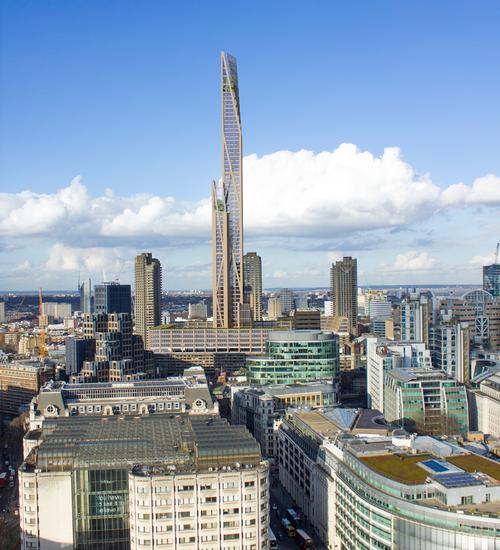
Timber skyscrapers can improve our built environments and urban experiences, according British practice PLP Architecture and researchers from Cambridge University.
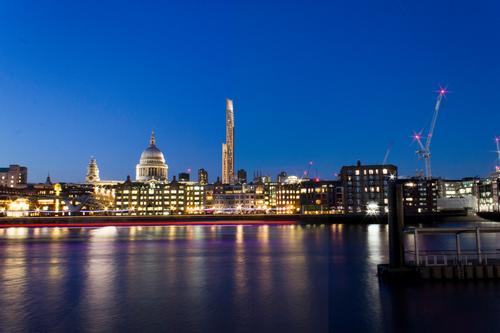
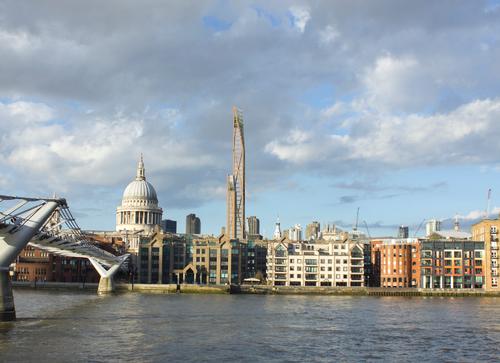
To give credence to this theory, the architects and academics have joined forces with engineers Smith and Wallwork to present mayor of London Boris Johnson with conceptual plans for an 80-storey, 300m high wooden mixed use tower integrated within the Barbican arts centre in the capital.
The use of timber as a structural material in tall buildings is an area of emerging interest, as it is a renewable resource that is lighter and cheaper than concrete and steel. Cambridge University has partnered with several globally renowned architects and structural engineers to produce a series of timber skyscraper concepts, with funding from the UK’s Engineering and Physical Sciences Research Council.
The conceptual proposals for their first tower – which would be the second tallest building in London after The Shard – include mixed-use cultural and leisure facilities and 1,000 new residential units. The development team said the proposed building would be constructed more quickly than a steel or concrete counterpart, and exceed every existing fire regulation currently in place.
Dr Michael Ramage, director of Cambridge’s Centre for Natural Material Innovation, said: “We’ve put our proposals on the Barbican as a way to imagine what the future of construction could look like in the 21st century.
“If London is going to survive it needs to increasingly densify. One way is taller buildings. We believe people have a greater affinity for taller buildings in natural materials rather than steel and concrete towers.
"The fundamental premise is that timber and other natural materials are vastly underused and we don’t give them nearly enough credit. Nearly every historic building, from King’s College Chapel to Westminster Hall, has made extensive use of timber.”
Kevin Flanagan, a partner at PLP Architecture, added: “We now live predominantly in cities and so the proposals have been designed to improve our wellbeing in an urban context. Timber buildings have the potential architecturally to create a more pleasing, relaxed, sociable and creative urban experience.
“Our firm is currently designing many of London’s tall buildings, and the use of timber could transform the way we build in this city. We are excited to be working with the university and with Smith and Wallwork on this ground breaking design and engineering-based research.”
The timber skyscraper would be constructed using ‘crop’ wood, stockpiles of which are expanding globally. According to the researchers, Canada alone could produce more than 15bn cubic metres of crop forest in the next 70 years – enough to house around a billion people.
Dr Ramage said: “We’ve designed the architecture and engineering and demonstrated it will stand, but this is at a scale no one has attempted to build before.
“We are developing a new understanding of primary challenges in structure and construction. There is a lot of work ahead, but we are confident of meeting all the challenges before us.”
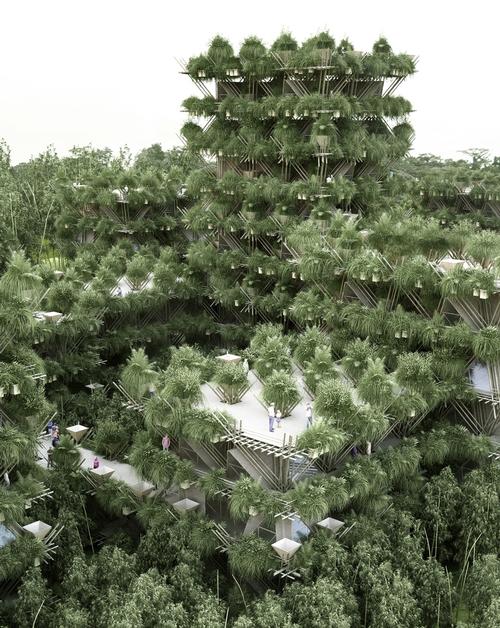
PLP are the latest architecture studio to propose a natural alternative to steel and concrete construction. Beijing and Vienna-based practice Pends say they want to create a city for 20,000 people made entirely from bamboo using a new structural system.

Swim Teacher
Swim Teacher
Fitness Manager
Operations Manager
Contract Sales Manager
Membership Advisor
Recreation Assistant/Lifeguard (NPLQ required)
Team Leader
General Manager


General Manager
Swim Manager
Sports Coach
Sports Coach
Swim Teacher
Group Exercise Instructor - Aqua
Swim Teacher
Swim Teacher
Activity and Wellbeing Instructor
Swim Teacher
GP Exercise Referral Instructor
Duty Manager

Catalogue Gallery



Company profile

Directory
Featured Supplier

Property & Tenders
Company: Lee Valley Regional Park Authority
Company: Newmark
Company: EiA Real Estate
Company: Savills
Company: University of Oxford