












Avocado sector fights back after Wimbledon ban


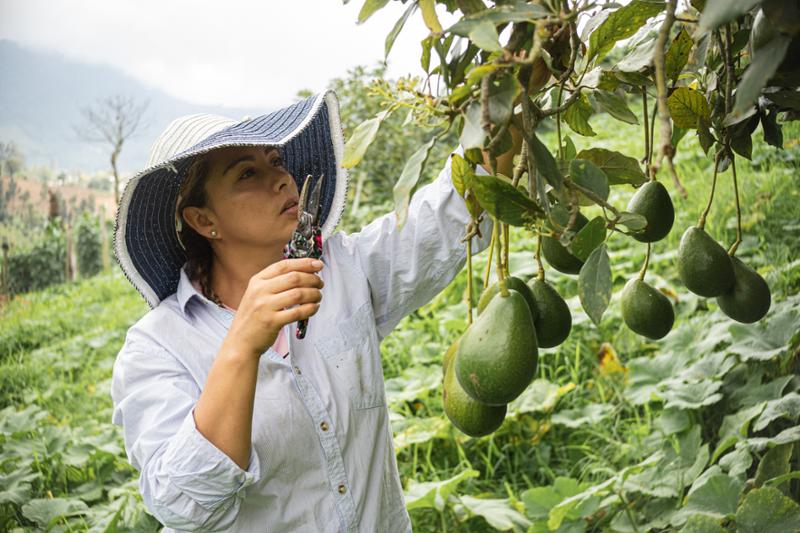

The World Avocado Organisation (WAO) has warned Wimbledon that banning avocados from its menus will reinforce outdated misconceptions about the sustainability of the fruit.
Wimbledon organiser, The All England Club, has stopped serving avocados during the event – which runs between 30 June-13 July, replacing them with crushed peas.
Fears about the environmental impact of growing avocados in vast quantities is behind the move.
Influential horticultural voice, Alan Titchmarsh, recently wrote a letter to The Times newspaper saying the fruit should not be eaten because it's grown “where the rainforest has been felled at an alarming rate and needs huge – and often scarce – supplies of water” before it's shipped to its final destination.
Titchmarsh also compared avocados to foie gras, as morally wrong for consumption.
The WAO has praised Wimbledon’s efforts to become more sustainable, but it has highlighted research to show that not only are avocados nutritionally dense, but also that farming and eating them is environmentally responsible.
The organisation also noted that avocados imported into the UK undergo checks to ensure growers and importers employ sustainable methods.
Zac Bard, chairman of the World Avocado Organisation said: “We fully support sustainable practices, especially at high-profile events such as Wimbledon, however, removing avocados from the menu sends the wrong message. It perpetuates myths that are not backed by current data. In reality, avocados are one of the most nutrient-dense and environmentally responsible fruits available today. Misconceptions such as these can have non-desired impacts and affect small farmers who rely on growing avocados to make a living.”
Wimbledon has been approached for comment.
Water usage
The WAO says avocados need similar amounts of water when compared to other fruit crops and minimal pesticides, citing this independent study.
Greenhouse gas emissions
According to a study (quoted by WAO) on the environmental impact of various fruits consumed across the UK, avocados produce 2.4kg CO2 equivalents per kilogram – the same amount as plums. The comparable figures for other fruits include strawberries (2.3kg), raspberries (2.5kg) and mangoes (4.4kg).
Avocados require roughly 8-10 times less water than beef, chocolate and coffee and produce 25 times fewer greenhouse gases than beef and 10 times less than cheese.
Farming
The WAO says the avocado industry is working to minimise its carbon footprint at farm level. It also says the large trees that avocados come from play a role in capturing and storing CO2 – and that a mature tree can absorb about 22kg of CO2 per year.
UK avocados are primarily imported from Peru, Chile, Colombia and South Africa. These are transported by sea, which results in 25 times fewer emissions than road transport and 145 times fewer emissions than air transport, according to WAO.
The WAO also says avocado farming supports local communities and economies in regions that grow them around the world.
Nutritional value
Avocados have a reputation for being a healthy, nutrient-dense food. They contain monounsaturated fats, which provide a sustained source of energy. They're also a source of vitamin B, vitamin C, lutein, biotin, potassium and are high in fibre.
UK registered nutritionist Kerry Torrens said: “Avocados are much more than just a food trend. They’re naturally rich in heart-healthy fats, fibre, and important nutrients such as vitamin E, copper and potassium. Thanks to their versatility and satisfying texture, they’re a smart addition to a balanced and varied diet.”
Other sustainability efforts at Wimbledon
Wimbledon's organisers have changed a number of its food and beverage practices to reduce the event's environmental impact. These include the removal of smoked salmon that is the product of fish farming.
Plant-based cream will be available for the strawberries and cream that is synonymous with the tournament.
In order to reduce food waste, unsold food will be given to a charity called City Harvest, which will then deliver it to those in need for free. The van the charity will use is called Vandy Murray – honouring British tennis legend Andy Murray.
Thirty of the 42 kitchens on site have switched from using gas supplies to sustainable electric and players will now use showers heated by solar thermal tubes.

Sports Coach
Sports Coach
Swim Teacher
Party Leader
Group Exercise Instructor - Aqua
Membership Advisor
Swim Teacher
Customer Service Advisor
Swim Teacher


Activity and Wellbeing Instructor
Operations Manager - Brentwood School Enterprises
Swim Teacher
GP Exercise Referral Instructor
Duty Manager

Catalogue Gallery


Company profile

Directory
Featured Supplier

Property & Tenders
Company: Lee Valley Regional Park Authority
Company: Newmark
Company: EiA Real Estate
Company: Savills
Company: University of Oxford