

CSR: Inside Responsiball, the responsible football initiative
The commercialisation of football – and pressure to ‘give something back’ – has resulted in a focus on social responsibility. Tom Walker learns about Responsiball, an initiative which charts the growth in football-related CSR



When Switzerland-based Schwery Consulting – a business that helps sports organisations to devise corporate social responsibility (CSR) strategies – wanted to find examples of best practice in football in 2009, it faced a dilemma. While it was clear that more clubs were getting involved in CSR schemes, there didn’t seem to be any resource offering information and detail on the initiatives themselves. So to solve the problem, the company set about creating one.
Responsible practices
“When we started, there really was no entity that was sharing information about how football clubs – or professional leagues and associations – were delivering CSR,” says Daniel Cade, senior consultant at Schwery. “No one seemed to be keeping records. Not the clubs, not the national federations and not even international organisations. We knew there was some good work being done in football, but it simply wasn’t being shared on any platform.”
To tackle the problem, the Schwery team created Responsiball – an online platform which aimed to collect and showcase good practice across the three areas traditionally associated with CSR: environmental stewardship, good governance and community engagement.
“The sector was growing rapidly and we wanted to help clubs and individuals who were looking to find out more about CSR and what it could mean for a football club,” says Cade. “The aim was to highlight best practice, so people working in the field would be able to see what others were doing and learn from them.”
Following encouraging feedback, the team at Schwery set out to develop the concept further. They came up with the idea of publishing a “social responsibility ranking” for football – a league table that would not merely list and highlight CSR initiatives, but systematically assess and rank the clubs playing in professional football leagues. The goal was to determine how the top clubs worldwide were performing across three key areas – governance, community and the environment.
Funded entirely by Schwery, the first Social Responsibility Ranking of Football Leagues in Europe – also known as the Responsiball Ranking – was published in 2012 and ranked 16 top European football leagues according to their CSR performance.
The report showed that while some clubs were getting active in CSR, there was huge potential for improvement. On average, clubs scored just 19 per cent on Responsiball’s best practice requirements – and 29 clubs out of the 400 featured didn’t manage to score a single point on any of the three indicators. It was clear that while CSR was becoming more important, clubs were still unsure of how to deliver it successfully.
Report card
The first ever ranking was received with intrigue by the football fraternity and the interest shown encouraged Schwery to make the report annual. Now in its sixth year, the latest Responsiball audit was completed in the summer of 2016 and the results were published in August. The format has remained largely the same, although the indicators are reviewed periodically, and the 2016 edition featured 18 leading football leagues. Assessments are made using an online audit, by Schwery’s army of analysts.
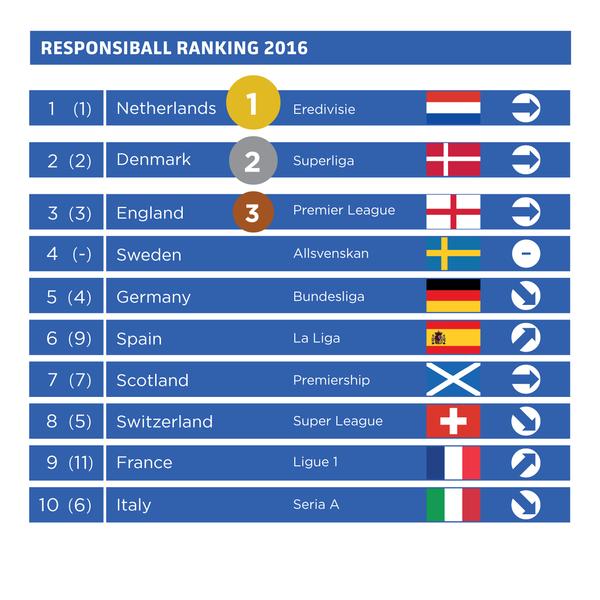
In the latest report, it is clear that the “bigger” leagues – perhaps surprisingly – have some catching up to do when it comes to CSR. The Eredivisie of the Netherlands was deemed the most socially responsible top league in the world in 2016, followed by the Danish Superliga. As both are considered minnows in the global footballing hierarchy, it suggests that having a coherent CSR strategy isn’t dependent on large revenue streams.
Out of the world’s leading leagues, only The English Premier League and the German Bundesliga feature in the top five. Despite their popularity and prestige, French Ligue 1 (9th with an average score of 26 per cent) and Italy’s Serie A (10th, 23 per cent) struggle when it comes to CSR. Both lag behind smaller leagues with less financial clout, such as the Swedish Allsvenskan (4th with 40 per cent) and the Scottish Premiership (7th, 29 per cent).
Strategic approach
According to Cade, examining the annual Responsiball results has shown that football clubs – especially those with smaller budgets – are becoming more aware of the importance of having a CSR strategy in place. “There is no doubt that clubs are realising that there are real benefits to having a credible CSR programme,” Cade says. He adds that clubs are also waking up to the fact that there is more than one way to demonstrate commitment.
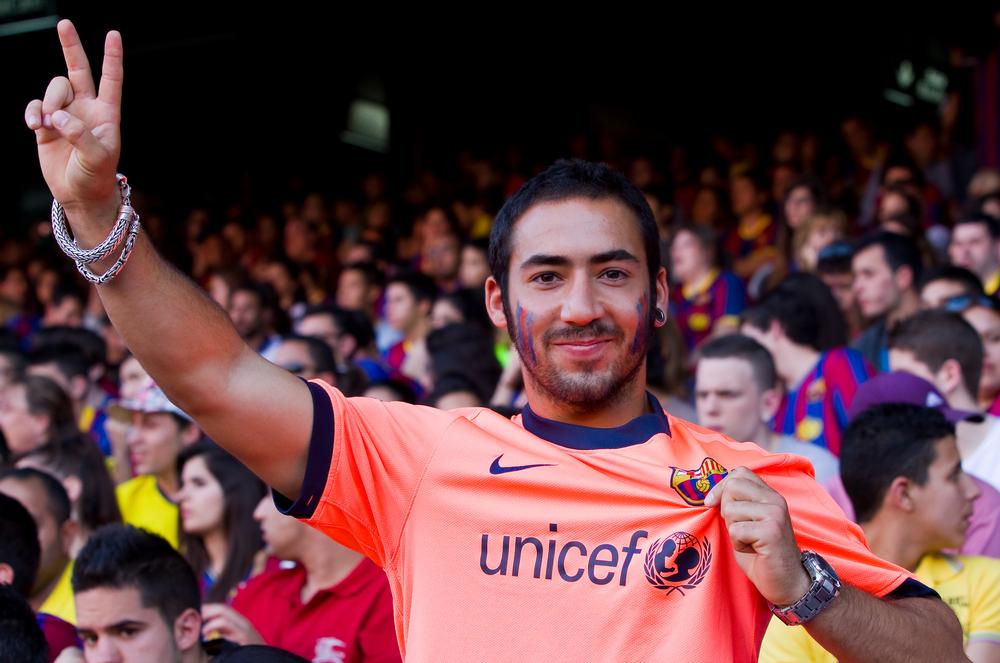
“At the time when we first launched Responsiball, FC Barcelona was playing its games with UNICEF printed on the front of their shirts,” Cade says. “Some clubs saw that and seemed to think that that must be a key component of CSR in football’.
“To an extent, they were right, that is CSR – but signing one high profile deal with a global charity or NGO doesn’t work for every club. Through the work we’ve done with Responsiball, it’s obvious that clubs have realised there is no template to what CSR is. What works for FC Barcelona wouldn’t necessarily work for a smaller club in the English Premier League or a club in the German Bundesliga.
“Clubs are slowly learning that they need to have different strategies based on different factors, such as their location and who their fans are. Being aware of your stakeholders’ need is an essential facet of a successful CSR programme in any industry.”
Cade adds that as awareness of CSR increases, football clubs are starting to become more innovative in their approaches. He points to clubs highlighted in the 2016 report, that created campaigns targeting improvements to a specific aspect of their club operations and looking to engage a particular fan group or stakeholder.
These include FC Augsburg in Germany, which has introduced impressive environmental initiatives and is now building its entire club ethos around becoming “the most sustainable club in the world”.
As a good example of improving community cohesion, Cade points to Spain’s Deportivo La Coruña, a club that has devised a very detailed ‘code of conduct’ for itself and runs campaigns against discrimination, racism and xenophobia as part of a strategy to improve social cohesion in a multi-cultural setting.
Future steps
In the six years since the first annual report was published, the Responsiball platform has built up a reputation for being a reliable and useful resource. The Responsiball “brand” is now recognised throughout the football community and, according to Cade, there are even signs that clubs are now looking closely at the criteria and actively trying to improve their scores.
“A good example of how clubs are using our report is the Eredivisie,” Cade says. “In the first year of the report the league ranked fifth. The following year it was fourth. In fact, each year it has jumped one spot higher – and has now occupied the top spot for consecutive years.
“I’m sure that part of the reason for their progress is that the Eredivisie and its clubs watch us closely and have studied our indicators – and try and improve the aspects of their CSR programmes they’re lacking in.”
Cade adds that the success of Responsiball means that there’s increasing pressure on Schwery to keep developing the service – but that the ultimate goal is for the platform and the report to be developed into an independent entity.
“We’re often asked who owns Responsiball. Curently it’s owned and funded by us. But our long term goal is to make Responsiball a stand-alone, non-profit organisation.
“We’re looking for funding so we can make sure that it’s a sustainable organisation and that it has funding for the next five years or so. At the moment we’re going from one year to the next, funding it with the money we make from consulting.”
RESPONSIBALL RANKING 2016
The Responsiball Rankings are now in their sixth year and are encouraging clubs to tackle their social responsibilites
Back to school in Italy
CLUB ATALANTA BC
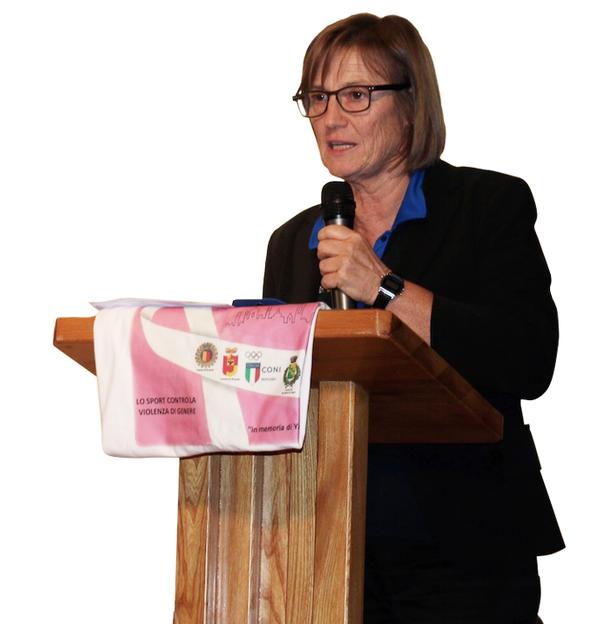
Italian Serie A club Atalanta has created an innovative social cohesion programme in partnership with Italian educational psychologist Lucia Castelli. The ‘School Stadium’ project is primarily targeted at students in primary and secondary school, but is also open to older children.
Working with local schools, the School Stadium initiative aims to get children more physically active by arranging sports events, promoting tolerance through anti-racism campaigns and encouraging “fair play” in everyday life through football sessions.
The programme includes a visit to Atalanta’s Atleti Azzurri d’Italia stadium where children get to take part in a game on the famous pitch. The game is followed by a teacher-led educational session – which includes socio-cultural reflections on football – and a meeting with an Atalanta player.
First launched in 2001, School Stadium has reached out to 337 schools and 17,533 students. The programme also includes educational summer camps.
Access all areas in Switzerland
CLUB FC LUZERN
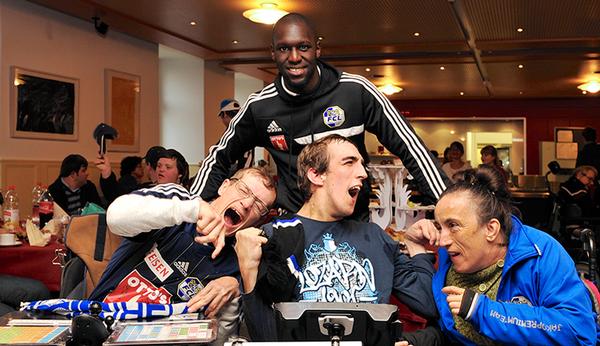
Swiss club FC Luzern has become renowned for the services it offers for its disabled fans. Information on accessibility is readily and prominently available on its website – not always the case with sports clubs – and has also been made available in a format accessible for the visually impaired, a factor often overlooked by clubs.
Specially-designed maps and guides on how to access the stadium on match days can be downloaded either on mobile devices or in printer-friendly formats.
Once disabled fans arrive at the club’s Swissporarena, they are greeted by specially designed signage and staff who have received extra disability training. Visually impaired fans are given free access to a specific area at the stadium and a special radio service transmits all matches live to headsets. The 16,800-capacity stadium also has 32 wheelchair spaces – with plans for more.
The investment has resulted in the stadium becoming one of the first sports venues to be awarded the SIA 500 “Barrier-free buildings” standard by the Swiss Society of Engineers and Architects (SIA).

Team Leader
General Manager
General Manager
Swim Manager
Membership Advisor
Sports Coach
Sports Coach
Swim Teacher
Party Leader


Group Exercise Instructor - Aqua
Membership Advisor
Swim Teacher
Swim Teacher
Activity and Wellbeing Instructor
Operations Manager - Brentwood School Enterprises
Swim Teacher
GP Exercise Referral Instructor
Duty Manager

Catalogue Gallery


Company profile
Directory
Featured Supplier

Property & Tenders
Company: Lee Valley Regional Park Authority
Company: Newmark
Company: EiA Real Estate
Company: Savills
Company: University of Oxford