


Trends: Euro deals
As the European fitness industry heads to FIBO, Kath Hudson rounds up some of the deals which have happened during the last year


At the start of last year, Deloitte and EuropeActive’s European Health & Fitness Market Report 2024 showed that the European health and fitness sector had well and truly left the pandemic behind.
Revenues were up 14 per cent and had exceeded pre-pandemic levels; memberships up by 8 per cent and there was a 1 per cent increase in the number of clubs. There was also a noticeable shift away from home fitness towards club-based exercise. This momentum continued throughout 2024 and into 2025, with plenty of activity.
The big three
Basic-Fit, the largest and fastest growing European gym operator, added 173 clubs to its network last year. When announcing full-year results earlier this year, CEO, Rene Moos, said growth will be deliberately racheted back to 100 clubs this year and in 2026.
“At the new growth pace, we’ll remain the fastest growing fitness chain in Europe while generating a significant amount of cash,” said Moos. This will enable shareholder returns through the launch of a €40 million share buy-back programme this year.
The Dutch low cost operator sold the five Holmes Place clubs it had acquired in Spain, as part of the RSG Group estate, to Spanish premium sports facilities operator, WeMet, in the summer. The estate included three clubs in Madrid and two in Barcelona.
Nothing was said in the annual results about plans for franchising which were trailed last year.
Europe’s second largest operator, RSG Group, has been focused on rolling out the refresh of its legacy brand, McFit. The bright and welcoming designs feature dedicated women’s areas with direct access to changing rooms as well as more social spaces.
The 49th site in its premium brand, John Reed, was launched in Berlin, in a former slaughterhouse. The company is looking for more opportunities in cosmopolitan cities in the US and Europe, however, it’s extremely selective about sites, which must fit the brief from both a location and architectural point of view.
On 1 January 2025, Gerd Schaller, brother of the late founder, Rainer Schaller, joined the management team as the third CEO, alongside Hagen Wingertszahn and Dr Jobst Müller-Trimbusch.
With three CEOs at the helm, the company plans to develop key business areas such as digitalisation, expansion and customer concepts. “Our task will be to further develop the company, implement innovative concepts and inspire people around the world,” said Schaller.
British high value low cost operator, PureGym, is Europe’s third largest fitness company, the market leader in Denmark and has a growing business in Switzerland. In 2024 it was mainly concerned with establishing a strong foothold in the US, with the acquisition of Blink Fitness, as well as its UK rollout, experimenting with smaller footprints to go into local communities and high-street type locations.
Speaking in this issue (p44), CEO, Clive Chesser, says: “We believe our high value, low price model is compelling in all the markets where we operate and probably every market around the world, and increasingly, we intend to explore that.
“We’re currently opening more than a gym a week and the pipeline is strong for 2025 and into 2026. We’re looking at 70+ openings in 2025; just over 50 in the UK, probably 10 to 12 in Switzerland and the rest elsewhere, including the US where we’re already looking for sites.
“There’s also the opportunity to enter new international markets. There’s nothing imminent, but we’re having some serious conversations. We aren’t tied to any particular model and I’ve worked with a wide array during my career – corporate fully-managed, master franchises, master and sub-franchise, joint ventures – so we’ll explore all options.”
The fight for Spain
With just 700 value gyms in Spain, this is seen as a growth opportunity that a number of operators are eyeing, including Planet Fitness.
The US health and fitness giant, opened its first site at Barcelona’s Via Sabadell shopping centre, in July 2024, as a joint venture with a franchise partner.
CEO Colleen Keating, said: “The 10 per cent penetration rate in Spain offers an incredible opportunity and we believe the judgement-free, affordable Planet Fitness concept will resonate.
“We’re leveraging our strong balance sheet to drive growth at a faster pace and demonstrate proof of concept in exciting new markets as we continue to position Planet Fitness for sustained growth and value creation,” she continued.
In addition to franchising, Planet Fitness has hinted it might also look to grow by acquisition in Spain and Tom Fitzgerald, recently retired FD is on record as saying he believes there’s room for 300 Planet Fitness locations in Spain.
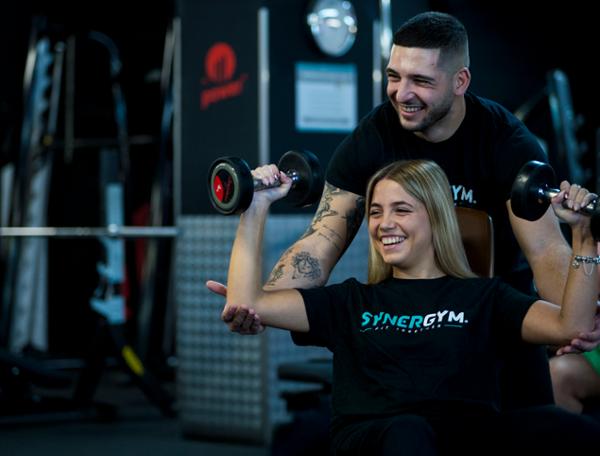
However, some homegrown Spanish operators are also on aggressive rollouts. Synergym – a company which continued to expand even through the pandemic – has entered into a €70 million financing agreement to fund expansion, with plans to open 40 clubs a year for the next two years, bringing its estate to 200 by the end of 2026.
Speaking to HCM, for an interview in the next edition, MD, Jordi Bella, says: “We now operate in every region of Spain and are well-structured to grow here. Synergym’s growth is 100 per cent organic, because it allows us to maintain the same quality across our entire chain.
“This also means we can deliver up to 50 per cent EBITDA margins in each club and we even remained profitable throughout the pandemic
“In February, this profitability – along with our strong growth plans – saw us become the first value fitness chain in Spain to raise financing from traditional, highly risk-averse banks.”
VivaGym, which was acquired by Providence Equity Partners in June, more than doubled in size in the latter half of 2024, by acquiring 113 sites and opening five, bringing the estate to 224. The acquisitions were 70 Altafit clubs, 10 Smart Fit gyms, eight Macro Fit, four OneFit, 20 Fitup and one >b>Fitness4all.
Speaking in HCM issue 1 2025, Juan del Rio (www.hcmmag.com/JuandelRio), said the company will be looking to fortify its position in Spain and Portugal during 2025 and 2026, including developing new clubs on greenfield sites: “We expect to open 100 new gyms over the next five years. From 2027 we’ll look further afield, assessing opportunities in Europe and potentially in other areas of the world.
“I’ve always maintained a desire to have a million members in the VivaGym system and there’s plenty of opportunity.,” said del Rio. “The penetration rate in Iberia is currently only around 10 per cent, which I can see growing to 15 per cent over the next few years. Meanwhile, even with 224 clubs, we’re still only present in 31 of Spain’s 50 major cities, leaving significant room for expansion”
Activity in central Europe
Dutch company, Urban Gym Group – which operates a number of brands including Trainmore, Club Sportive, PILAT3s,TRIB3, BTYCLB and Renessence – is looking for further expansion and in October announced the acquisition of Sparring Partners Holdings, owner of UK-based boutique brand, Gymbox, which had 10 sites trading.
Urban Gym Group CEO, Neil Randall, said: “Gymbox is an iconic business with a unique personality and there are great synergies between our brands. This deal marks the beginning of an exciting new chapter, starting with the development of a new flagship club in Finsbury Park, London, along with further investments into the current estate.”
Belgian operator, Jims, owned by the Colruyt Group has doubled in size this year with the acquisition of 40 fitness clubs from NRG, making it the second largest fitness operator in the Belgian market (behind Basic-Fit).
Pieterjan Nuitten, MD at Jims (See HCM Summit www.hcmmag.com/HCMsummitPJ), said: “This puts us several years ahead of target in the plan we had set for Jims. We have now doubled in size at a stroke with one deal.”
Jims and NRG are equivalent in terms of size, price point and offering, and location-wise there is little overlap. Both are primarily city-based and Jims has a strong presence in Ghent and Brussels, while NRG is well represented in Antwerp and Limburg. The aim is to evolve relatively quickly into a single brand with aligned membership options and rates.
After being bought by Waterland in September, LifeFit Group has been on a buy and build strategy, including the acquisition of Body Culture Group last October, SportsUp in January and a premium Munich health club, Sports and Health in March.
Last month the company agreed its largest transaction to date when it merged with Fit/One Group, also owned by Waterland. This deal gives LifeFit Group a platform to build on in Austria. The additional 45 clubs – 33 in Germany and 12 in Austria – brings the estate to 210 and much closer to the goals of 250 operational clubs by 2028.
Martin Seibold, CEO of LifeFit Group, says “This merger is the largest transaction to date and the next logical step towards internationalisation and the exploration of new regional markets, particularly in Austria. We are excited to become active in our neighbouring country.”
Fast Fitness Japan, master franchisee of Anytime Fitness in Japan, acquired the master franchisee rights to Anytime Fitness (part of Purpose Brands) in Germany. Headquartered in Tokyo, the company operates 1,100 clubs in Japan, with 800,000 members, and has been seeking opportunities for growth both domestically and overseas.
Kiyoaki Yamabe, CEO of Fast Fitness Japan, says: “We are delighted to have obtained master franchisee rights for Anytime Fitness in Germany, a market with a high fitness participation rate where we project a need for high added-value fitness gyms. We will continue to work closely with the Purpose Brands headquarters in the US to further accelerate the opening of new clubs in Germany, as well as other countries.”
The world’s largest boutique franchisor, Xponential Fitness, launched more than a dozen Club Pilates studios in the UK, Spain, Germany, Portugal and France. YogaSix made its European debut in Frankfurt, while BFT launched new studios in Glasgow, East Croydon, and Barcelona and signed a master franchise deal for Scandinavia.
Club Pilates will be entering Belgium, Luxembourg and Monaco under a new master franchise agreement, alongside growth in Spain, France, and Portugal.
Eastern Europe
Polish franchisor, Xtreme Fitness Gyms, hit the milestone of 100 sites at the end of last year and is aiming for 500 locations in the country in the next six years, as well as eyeing neighbouring countries.
Last year the mid-market franchisor opened 42 clubs, there are more than 60 planned for this year and the team is planning to expand into neighbouring countries, either by direct franchising or master franchising.
Speaking in this issue, CEO James Cotton, says: “We’re very much looking for speed. The fitness franchise market in Eastern Europe is wide open, so we’re looking to occupy that space.”
Polish aggregator, Benefit Systems – which runs the MultiSport Program used by more than two million employees in Poland, the Czech Republic, Slovakia, Bulgaria and Croatia – boosted its portfolio to 240 clubs last November, with the acquisition of MyOrganiq, which has eight facilities in western Poland.
The company also took its first step into the mental health domain by acquiring a 69.8 per cent stake in Wellbee, a Polish mental health and personal development platform.




Contract Sales Manager
Membership Advisor
Recreation Assistant/Lifeguard (NPLQ required)
Team Leader
General Manager
General Manager
Swim Manager
Sports Coach
Sports Coach


Swim Teacher
Party Leader
Group Exercise Instructor - Aqua
Swim Teacher
Swim Teacher
Activity and Wellbeing Instructor
Operations Manager - Brentwood School Enterprises
Swim Teacher
GP Exercise Referral Instructor
Duty Manager




Company profile
Directory
Featured Supplier
Property & Tenders
Company: Lee Valley Regional Park Authority
Company: Newmark
Company: EiA Real Estate
Company: Savills
Company: University of Oxford