


Going global
Taking a museum or visitor attraction’s retail offer international can cement its reputation, entice new audiences and increase revenue. Retail design expert Callum Lumsden offers tips on how to get it right


No museum or visitor attraction is complete without a retail offering, but for a select few, that can become a global phenomenon.
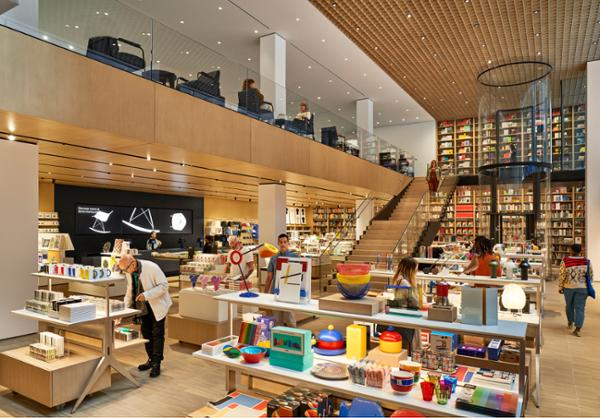
MoMA is the most obvious example of this in action: starting with its standalone Design Store in New York – designed by us at Lumsden – it has now opened further stores in Tokyo, Kyoto, Hong Kong and one in Germany is on the way. The New York-based museum has also launched a series of commercial spaces within Loft, one of Japan’s largest department stores, including Kyoto.
But there are others who have begun to recognise the benefits of an international presence too. People may make sure your museum is a stop whenever they visit the country you are based in and visit the gift shop while they’re there, but what if you could bring some of that joy closer to them? Take the V&A: in 2020 the museum launched an art deco pop-up – The Grand Time Hotel – in Shanghai, where visitors could buy cocktails and limited-edition merchandise.
People long to own something beautiful or historical and museums contain an abundance of these. In an ever-more connected world, now is the perfect time for cultural institutions to take a piece of that to a wider international audience. Elevating museum retail in this way is no easy task, but will be incredibly rewarding if done right. Here are the most important elements to bear in mind for those ready to step up.
Understanding the museum’s brand
Successful museum stores are always the ones that aren’t merely an afterthought. They reflect why people visit the museum, what it stands for and understand what people really want to buy. Once that’s wrapped up, that experience can be taken around the world.
The first step is always to understand the museum’s aspirations. What element of the museum do you want to take to the global audience? What will that say about the museum? Who is this aimed at? How involved can the curators be when it comes to vetting and commissioning the products in the store? What are the stories about the collection that you want to communicate with the merchandise?
I’ve seen museums or galleries with international reputations that tourists flock to, flounder when they open a concession store elsewhere. Why would you go to a department store to buy a poster for an exhibition you haven’t been to? Or a fridge magnet representing a place you haven’t visited?
Bringing that brand to life
MoMA is again a perfect example: the store is for art and design-lovers as well as tourists. A tourist is looking for an item that says “I was there”, a design or art lover or enthusiast wants something that looks great and has been beautifully crafted. At MoMA, even the most tourist-orientated pieces are not only well designed, but are also made with purpose, linking back to the museum’s brand, values and collection.
Any retail offering must be a strong, considered range that stands up independently of the museum setting. The products should be iconic in their own right or must be intrinsically linked to the collection, so that it’s like taking away a piece of the museum in a way that people can appreciate – even if they haven’t visited the museum. Having museum curators involved in merchandising is a real benefit here.
The centre of any international retail operation has to be that brand identity. Standalone stores will need to reflect that through the materials and colour palettes that are used, so that it’s about bringing a piece of the museum to a new destination. The MoMA brand never loses its ties to New York, but brings it to Japan, Hong Kong and Europe, while the V&A brings its authority in, and a vast collection of, Art Deco couture and products, for example.
Looking for new partnerships
Another tactic that savvy museums are currently embarking on is launching brand partnerships. England’s National Gallery recently paired with Doc Marten to create a series of shoes featuring the work of Claude Monet, Vincent van Gogh and Georges Seurat. American skate brand Vans has partnered with Amsterdam’s Van Gogh Museum so that the artist’s masterpieces appear on its shoes, while watch brand Swatch has previously launched a collection with the Louvre Museum, as well as the Rijksmuseum Amsterdam and the Thyssen-Bornemisza Museum in Madrid. In 2021, the British Museum launched an eye-shadow palette influenced by ancient Egypt with Chinese makeup brand Zeesea.
These tie-ups allow the museum to align its brand with products that catch a global market’s attention and allow the museum to target certain demographics. It works both ways, of course: the brands need the museum identity as much as the other way around, linking the brands with high culture and history. Doc Martens and Van Gogh might seem like an unlikely duo, but his Sunflowers look brilliant on a DM boot – and it’s been a great success for both parties.
What to watch out for
Before diving in, any museum must be aware of the challenges. There are operational logistics of running a retail business that is not physically connected to the museum and its visitors. From overheads and staffing to stock control and deliveries, these need to be considered carefully.
The biggest challenge for every museum is to avoid the temptation to stretch themselves and water down their reputation. The museums that will be successful will be the ones that maintain the integrity of their brand.
This is crucial. For any cultural institution looking to take its retail brand global, it must first truly understand what it stands for, what its brand is. The original stores must be updated and kept in line with this ethos. Only then can it take a leap into the world of global retail.

"Any retail offering must be a strong, considered range that stands up independently of the museum setting. Having museum curators involved in merchandising is a real benefit," – Callum Lumsden, Lumsden Design

Sports Coach
Sports Coach
Swim Teacher
Party Leader
Group Exercise Instructor - Aqua
Membership Advisor
Swim Teacher
Customer Service Advisor
Swim Teacher


Activity and Wellbeing Instructor
Operations Manager - Brentwood School Enterprises
Fitness Manager
Swim Teacher
GP Exercise Referral Instructor
Duty Manager
Community Activator Coach Apprentice

Catalogue Gallery

Company profile
Directory
Featured Supplier

Property & Tenders
Company: Lee Valley Regional Park Authority
Company: Newmark
Company: EiA Real Estate
Company: Savills
Company: University of Oxford