


Research : Happy talk
Where does happiness live? Researchers in Japan use MRI to find out and say it could be the key to increasing wellbeing. Jane Kitchen reports



Scouring self-help books, exercising, taking time-out, going to spas… we go out of our way to make ourselves happy. But do we really know what happiness is?
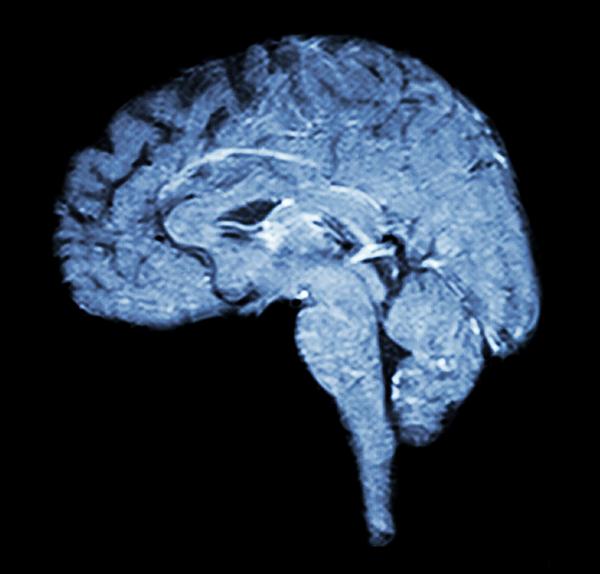
Scientists at Kyoto University, Japan, think they’ve found the answer by using MRI to narrow in on the neural structures behind subjective happiness. They hope their findings will have larger implications for happiness training.
Grey mass matter
Associate professor Wataru Sato and his team scanned the brains of 51 people using MRI. Participants then took a survey asking how happy they are generally, how intensely they feel emotions and how satisfied they are with their lives.
Their analysis, published in Scientific Reports* in November, revealed that those who had a higher happiness score had more grey matter mass in the precuneus. The precuneus is a region in the medial parietal lobe that becomes active during states of consciousness – such as when people are self-reflecting or daydreaming. There was about a 15 per cent difference in size between the smallest and largest precuneus in the participants.
Sato’s findings complements a study by Harvard Medical School and the University of Chinese Medicine which shows that less activity in the precuneus may be associated to depression.
Tapping into happiness
“Over history, many eminent scholars like Aristotle have contemplated what happiness is,” says Sato. “I’m very happy that we now know more about what it means to be happy.”
This is one of the first studies to use MRI to investigate happiness and the Sato believe that this paves the way for future scientists to clinically measure what things make people happier.
He’s also hopes his work may be useful in creating interventions to make people happier, especially if combined with meditation. Sato says: “Several studies show that meditation increases grey matter mass in the precuneus. This new insight on where happiness happens in the brain will be useful for developing happiness programmes based on scientific research.”
* Sato et al. The structural neural substrate of subjective happiness. Scientific Reports. November 2015.
Jane Kitchen is the news editor of Spa Business and Spa Opportunities
Tel: +44 1462 471929
Email: [email protected]

Contract Sales Manager
Membership Advisor
Recreation Assistant/Lifeguard (NPLQ required)
Team Leader
General Manager
General Manager
Swim Manager
Sports Coach
Sports Coach


Swim Teacher
Party Leader
Group Exercise Instructor - Aqua
Swim Teacher
Swim Teacher
Activity and Wellbeing Instructor
Operations Manager - Brentwood School Enterprises
Swim Teacher
GP Exercise Referral Instructor
Duty Manager




Company profile
Directory
Featured Supplier

Property & Tenders
Company: Lee Valley Regional Park Authority
Company: Newmark
Company: EiA Real Estate
Company: Savills
Company: University of Oxford