

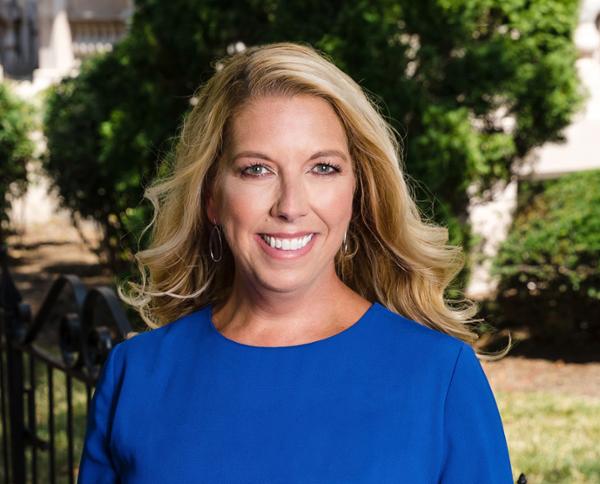
Liz Clark
Health and fitness is an industry I really believe in and I felt it was not being treated respectfully


You took over as IHRSA CEO and president at a difficult time. Why did you take the job?
I love the association model and the concept of being able to help companies and industries with their problems: be it with policies, reputation and getting them onto the right footing.
Health and fitness is an industry I really believe in and I felt it was not treated respectfully, or recognised appropriately, during the worst of the pandemic. I was really excited to get in the chair and change the narrative.
The first year was rough because the industry had been completely decimated, with almost 30 per cent of gyms and fitness centres in the US going out of business. Year one was about recovery, year two has been a year of rebuilding and stability and next year will be healthy.
It’s exciting that the US fitness industry is now back to where it was pre-pandemic and growing week by week. IHRSA membership is also growing, with global brands coming back in the tent. I continue to spend every day meeting potential members, as well as those who have been with us forever and may be left a little disenfranchised.
Tell us about your US government lobbying. Why do you think it is such a slog to get proper support for the health and fitness sector?
There’s a lot of competition to get our voice heard: there are 67,000 registered trade associations representing 67,000, different industries and more than a million representing philanthropic issues in the US alone.
Many of those other associations have been established for 120 years and we're not even a 50-year-old industry. We're really just arriving on the scene, so it’s all about building awareness.
We have a few wrongs to right. Our industry had some hiccups as it was building, like the problems around consumers cancelling or getting out of their memberships and the reputation for taking steroids. But there is also plenty of positive narrative about preventative healthcare and how we can be a solution.
We have some really simple talking points to take to decision makers about preventative healthcare and the potential ROI of investing in exercise, versus investing in healthcare, which could be considered sick care. The numbers sell themselves.
You came from the sugar industry, tell us about that
They have a lot of money, but they’re also very organised and have been doing it for a long time, so have built the relationships. It was a deliberate exercise to ensure candy/sugar was classified under food manufacturing because nobody wants to mess with the food supply.
It's important for the fitness industry to shift in order to become part of the healthcare conversations and be seen as contributing to preventative healthcare.
Even the policymakers understand exercise and what it does for your mental health. When you look at everything else we're competing with it won’t happen overnight, but it is a tremendous opportunity.
You said at the outset you wanted to reimagine IHRSA. How is this project unfolding?
It's definitely been a challenge and one I knew we would have at the outset.
It's important to have the perspective that this is a marathon and not a sprint. It's about building our staff to be the people we need them to be, in the positions where we need them and educating our members on how to leverage their voices with the right policy people.
There's been a lot happening in the administrative space to get us on the front foot, such as some structural changes about who sits on our board. From a diversity equity and inclusion point of view it’s important that our board is diverse.
Can you explain to us more about IHRSA’s general approach to public sector, government-subsidised and charitable ventures?
It's in our bylaws that IHRSA doesn't allow non-profits to be members because of the competitiveness issue, since they’re subsidised and get a tax benefit. However, that’s not to say we can't have a new path forward in this regard.
I've spent time with some of the non-profits to try and figure out ways we could partner – by doing research, for example.
We've also talked about how the industry was left behind and not recognised by the people who needed to recognise it, so it would be amazing if we could come together and advocate arm-in-arm with some of the non-profits.
What are IHRSA's plans when it comes to working with other trade bodies, such as EuropeActive, World Active and Aus Active?
We're exploring all of that and I’m very open to working with overseas partners. I have a great relationship with Dave Stalker at EuropeActive and we’ve talked about a path forward with research. Then there are more than 20 federations in the UK, Australia and New Zealand so we’re looking at creating a kind of consortium of what we could do together.
Research has always been a pillar of what IHRSA provided, but we’re looking at what more we can do and who we can partner with to ensure we're not doubling up. We’ve spoken to many research companies and we're looking at creating a consortium of groups which are invested in research.
How can we improve pay and training in the sector so we encourage talented people to build careers in fitness?
That's the question of the day and I don’t think it’s unique to our sector. I don't have the magic bullet and it’s a real concern. Offering training and certifications to help people grow is one way and we’re looking at creative solutions around business models, especially with trainers. One advantage for our industry is that we have an interesting narrative in terms of what we do for bodies and minds. People are really drawn to that.
What are the biggest trends you’re seeing?
It's a bit like everything that's old is new again. Two things which are coming back – free weights and cold plunges – were big in the 80s.
Two areas I’m hearing more about are nutrition and recovery and it’s interesting that now more people are exercising for their mental health than their physique.
We've only scratched the surface of wellness, but we're seeing clubs moving out weights to install massage chairs, and changing rooms with cryotherapy. So I think there is a lot coming in on the horizon in that space.
What are the plans for IHRSA in the short, medium and long term?
Our three strategic objectives are advocacy, education and research. Year one in the seat was really about keeping the lights on. This year is about looking at our organisation, rebranding it and having a strategic plan for where we want to go. In the next three years we're going to be focusing more on state advocacy and looking at new partners to have in the mix.
The long-term goal is for IHRSA to be seen by policy makers and decision makers around the world as the credited voice for the industry. That will involve recruiting smart, diverse, coalition partners and making sure we have a unified voice. I see the ultimate success as being recognised as an industry for preventative healthcare, from both a recognition and financial perspective. It's an ambitious goal, but I talk to a lot of folks around the world and it doesn't seem as though anyone's objecting!
The Personal Health Investment Today (PHIT) Act, which is being sponsored by IHRSA, would allow Americans to use pre-tax dollars, such as flexible spending accounts (FSAs) and health savings accounts (HSAs), to pay for health club memberships, fitness equipment, exercise videos, and youth sports.
In 2018, the PHIT Act passed the House of Representatives in the US for the first time, but the US Congress adjourned before the Senate could vote. Since then, IHRSA and industry leaders have worked alongside numerous members of Congress, to build support for it.
PHIT would enable individuals to use up to US$1,000 per year – up to US$2,000 for families – to cover physical activity-related expenses.



Sports Coach
Sports Coach
Swim Teacher
Party Leader
Group Exercise Instructor - Aqua
Membership Advisor
Swim Teacher
Customer Service Advisor
Swim Teacher


Activity and Wellbeing Instructor
Operations Manager - Brentwood School Enterprises
Swim Teacher
GP Exercise Referral Instructor
Duty Manager

Catalogue Gallery



Company profile
Directory
Featured Supplier
Property & Tenders
Company: Lee Valley Regional Park Authority
Company: Newmark
Company: EiA Real Estate
Company: Savills
Company: University of Oxford