












EXCLUSIVE: Could our future cities use technology to bring fun and surprise into our lives?


A leading architect in the conscious cities movement – which is exploring how architecture and urban design can better consider and respond to our needs – has told CLAD how emotionally-aware urban environments could add a necessary element of fun and surprise into our day-to-day lives.
Architect Itai Palti, founder of research group Conscious Cities, called for academics, scientists, developers, policy makers, architects and designers to collaborate on making our built environments more responsive, interactive and lively.
“When you talk about embedding technology into our cities, as with the Smart Cities movement, the way we’ve historically approached it is how do we make services and movement more efficient,” said Palti, in an exclusive interview.
“Something we've completely glossed over is how we recreate the characteristics of what we love about the street through technology.”
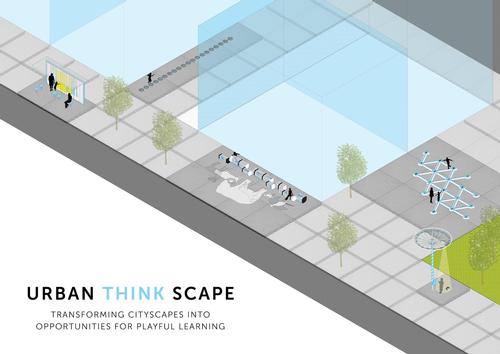
Palti explained how simple interactive features – such as street lamps that project colourful animations or interactive word games – could lift our spirits, prevent loneliness and educate us, meeting our “human need to fire curiosity and our imagination.”
“We should be discussing how through technology we can bring an element of surprise, disruption, novelty and unpredictability to daily life and how can we encourage interaction between strangers,” he said. “Technology has played its part in distancing people from one another, but I think it can bring people together too. A conscious city should answer to that.
“The first facet to consider is the city becomes aware of the needs of the people,” he continued. “You can see plenty of urban psychological studies into suburbs and how these impact teenagers in terms of boredom. If the city becomes aware of teenagers feeling bored, through sensors or emotion mapping, and understands this, then it can respond by creating adventures for people, fostering interactions and learning.
“We’re already seeing this with things like augmented reality and the gameification of our physical environment.”
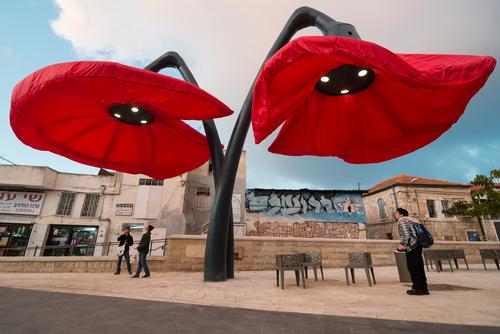
A current example of how technology and design can enliven an environment is a pair of giant, self-inflating flowers in Jerusalem’s Vallero Square. The installations, created by HQ Architects, bloom whenever they sense someone approaching, brightening that part of the city.
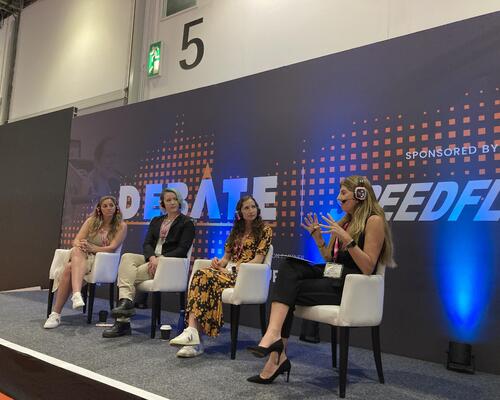
At a London conference last week on the subject of conscious cities – which featured Palti as a guest speaker – a number of figures from the worlds of science, architecture and real estate spoke about the strides forward in suitable technology, such as EEG brain sensing, and the likelihood of conscious cities emerging in the near future.
In the keynote speech, Sarah Robinson, an architect and academic, said: “We can no longer think of buildings as objects – they are active agents of our survival and there are simple ways we can enhance the experience of the built environment by responding to human context and physiology.”
However, several speakers warned about the ethical issues that arise in a world without privacy, where our cities know everything about us.
Ruari Glynn, director of British studio Interactive Architecture Lab, asked: “How do conscious cities take knowledge and use it in the right way? What is right and who decides?”
Juliette Morgan, the head of property at Tech City UK, posed the question: “Can walls forget what they’ve heard in offices? What happens to that data?”
Palti admitted to CLAD that “there is a darker element to conscious cities which could be dystopian in the wrong hands.”
“We have to tackle it in a pragmatic way through sensible policy,” he said. “There is an Orwellian nature to this concept, but you could also say taxing cigarettes is Orwellian, but we do it because smoking is bad for our health. Policies always scare people really early on.
“We’re the sharing generation and someone's ability to express things will soon become a really big commodity – almost more powerful than voting. We need to discuss how democratic, inclusive policy around these issues can affect us in a positive way. That’s a debate that needs to happen.”






Sports Coach
Sports Coach
Swim Teacher
Party Leader
Group Exercise Instructor - Aqua
Membership Advisor
Swim Teacher
Customer Service Advisor
Swim Teacher


Activity and Wellbeing Instructor
Operations Manager - Brentwood School Enterprises
Swim Teacher
GP Exercise Referral Instructor
Duty Manager

Catalogue Gallery


Company profile
Directory
Featured Supplier

Property & Tenders
Company: Lee Valley Regional Park Authority
Company: Newmark
Company: EiA Real Estate
Company: Savills
Company: University of Oxford