




















Optimism and unity defined the European Health and Fitness Forum 2025


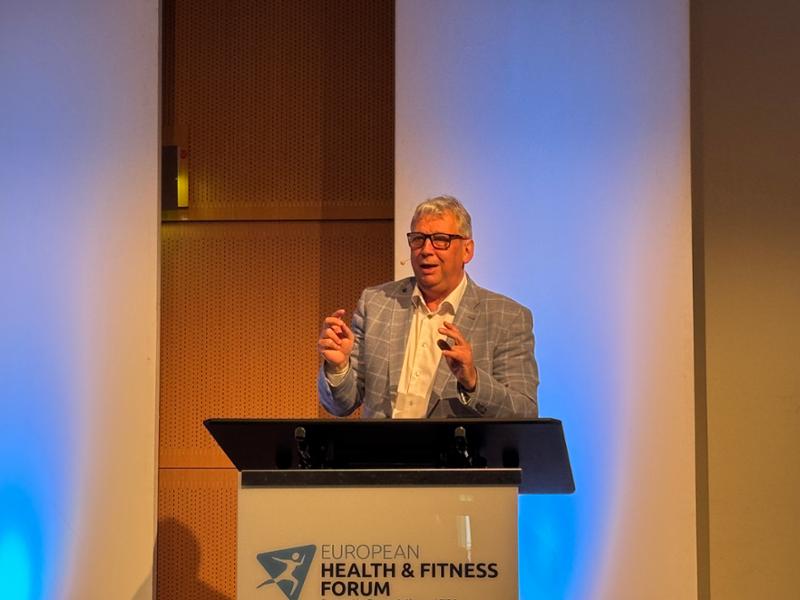
Growing the Health and Fitness Sector Together was the theme of this year’s EuropeActive European Health and Fitness Forum (EHFF), which took place on 9 April in Köln.
GoFit’s Steve Ward welcomed 560 delegates to the 12th iteration of the conference which preceded the 40th FIBO. He started by thanking outgoing president, David Stalker and welcomed interim president, Basic-Fit’s Marcel Boots.
Stalker co-chaired the event with paralympian, Denise Schindler who later in the day awarded two industry awards, one to Egym founder Philipp Roesch-Schlanderer, the 2025 Rainer Schaller Entrepreneurship Award recipient and Michelle Dand from David Lloyd, who received the EuropeActive Citizenship Award.
Latest research
The conference then kicked off with Karsten Hollasch from Deloitte and EuropeActive’s Herman Rutgers, presenting insights from the 2025 European Health and Fitness Market Report, which was published that day.
The new study includes operator case studies, as well as city-specific reports of major capitals across Europe including Paris, Milan and London. Major regional cities such as Manchester were also included.
Market penetration across Europe is varied, depending on the maturity of the market, ranging from 5 per cent in Eastern Europe to 21 per cent in the Nordics. This is versus 23 per cent in the US.
There are clear signs the market is consolidating, with the top ten operators now having a clear lead on the rest and 30 M&A deals recorded in 2024. A significant proportion of growth recorded by the top 10 operators was through acquisitions, with 535 clubs being added to their portfolios – 160 of which were due to M&A, 234 being organic openings and 141 franchises.
Hollasch said he's confident merger and acquisition activity will continue, although perhaps not at the record levels of 2024. The rate of M&A in the sector was skewed by the backlog of deals that occurred when investors were prevented from moving their investments on in line with the usual timescales by the pandemic.
Despite the pandemic getting in the way of growth, the report suggests the industry is still on track to hit EuropeActive's target of 100 million members across Europe by 2030, which was set in 2019.
Rutgers says penetration will increase as operators, such as PureGym and Purpose Brands, target smaller towns, while high demand and increased supply will naturally lead to higher penetration rates.
Business sentiment is improving, although Rutgers did flag that the sentiment report was done before Trump’s ‘liberation day’. Those opting for the top score in relation to business sentiment were 80 per cent of the sample this year, versus 60 per cent in 2023, while 68 per cent said business expectations in the next two years will improve ‘significantly’, against 40 per cent in the last report.
Customers and culture
Sondre Gravir, CEO of SATS and Rebecca Passmore, COO of PureGym took to the stage to discuss growing the health and fitness sector.
“One hundred million members is now in line of sight,” said Passmore. “The sector bounced back brilliantly from the pandemic and there has been an acceleration in demand due to consumers' prioritisation of health.”
Gravir spoke about the industry uniting behind a shared purpose: “We are not competitors, we can work together to grow the market. It’s much more fun to talk about how we can unite to stimulate growth and make people more active than it is to compete. The combination of affordable pricing and good products is the way forward – 20 per cent market penetration is just the beginning.”
Gravir and Passmore spoke about the Nordic countries having a higher IQ around fitness than other countries, with the government being more vocal about the benefits of exercise, which fuels demand, especially in older people.
Retention was also addressed. With Clive Chesser now at the helm of PureGym – with a background in hospitality – Passmore said the company is putting extra focus on listening to the consumer and putting the customer at the heart of decision making.
SATS is mining data to address churn and inform product development to keep members active. “Members don’t churn if they’re active, it’s the passive members which need focus, which comes from good onboarding and encouraging them to try different products,” said Gravir.
“If a member has been inactive for two weeks you have to act quickly. If they go from active to sporadic they’re heading to passive and you lose them at passive.”
With a previous career in retail before joining the fitness sector, Passmore also emphasised the need to use data: “Driving operations across multiple units consistently is fundamental to success. You have to think big when you scale and PureGym now has over 600 units, so this approach has been vital to our growth. CRM, join journey and online acquisition are all vital.”
Passmore said the culture of PureGym has been the foundation of its growth: “Culture eats strategy for breakfast. If you let your culture slide, it’s almost impossible to get it back on course and from PureGym’s point of view it’s been vital to maintaining our market leadership.
“As a senior leadership team, we’re like a family in the way we support each other and collaborate. We lean in and can react very quickly to support each other, while also setting high goals and expectations.”
“Culture is fundamental to everything we do,” agreed Gravir. “Driving the values of this business all comes down to culture and for many of our staff it’s their first job after they come out of education, so you need to bring them into the values and the culture of the company – energising, inclusive, happy. You have to live the values.”
Boutiques
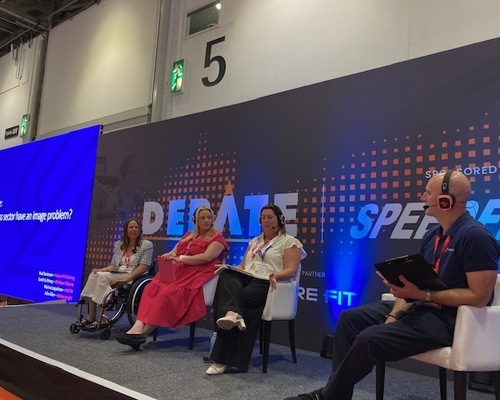
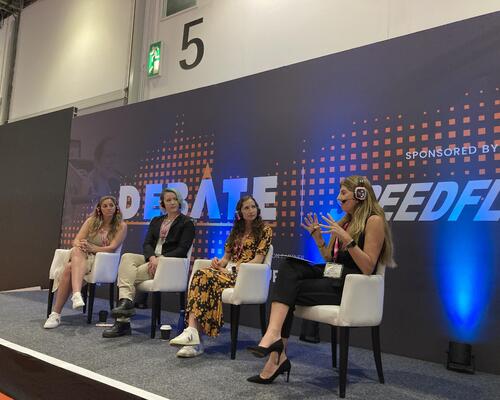
Ben Roth CEO of Urban Sports Club; Doron Dickman CEO of Holmes Place; Michelle Dand head of group fitness products and programming at David Lloyd Leisure and Jarett Perelmutter, senior vice president business development Purpose Brands, then joined HCM editor, Liz Terry, for a panel discussion on boutiques.
Budget boutiques were identified as a trend, as well as club-in-club boutiques, such as David Lloyd’s Blaze and Spirit concepts for HIIT and mindfulness. Holmes Place also incorporates sister brands TRIB3 and PILAT3s. Dand said a mix of two or three modalities makes the boutique model more robust and also gives the option of switching one out if it loses popularity.
Dickman echoed the sentiments of other speakers about putting the customer first: “At Holmes Place we put the customer at the heart of everything we do. We don’t want our members to feel as though they have to have a number of memberships, but aim to provide everything under one roof. We’re not educating the market but responding to it.”
Perelmutter said pricing is critical with boutiques, as is monetising every slot: “It’s about creating the right pricing and being more local, not a race to the bottom.”
Purpose Brands
David Stalker had a fireside chat with the CEO of Purpose Brands, Tom Leverton. New to the fitness industry, Leverton has been a partner with a private equity firm for five years, and previous to that was CEO at Chuck-E-Cheese, Omniflight and TopGolf.
“They might sound diverse but they’re all multi-site, service-based businesses which aren’t selling hard products, but are doing something to improve the lives of the customer,” he said.
He went on to talk about Purpose Brands – the merged business of Orangetheory and Self Esteem Brands – being made up of 7,000 “laboratories”.
“Each one is doing business somewhat differently, so how can we take those best practices and apply them everywhere?” he said. “As the franchisor we need to encourage brand new tests and thoughts, launch them and see if the members allow us to make them successful.”
He said the company had carved off 100 Orangetheory sites and done a deep dive into the operational processes and marketing habits to establish how an optimum site could operate if everything is followed by the book. “After only four weeks those sites are outperforming the rest of the chain,” he said. “The different brands are independent, but my job is to find the common needs and then provide those better.”
The merger has doubled the size of the company's IT budget, so more is being invested in data mining, AI tools and marketing. Going forward, Leverton says the use of wearables and gamification will become more important – so people can challenge themselves to do better but also receive fun stats to motivate them. Nutrition and community will also be important.
GLP-1
Brian Robinson, global chief strategy officer at Havas, gave an overview of GLP-1s and their broad-ranging influence. “GLP-1 medications are the most widely talked about topic on social media and impact everything from fashion to food,” he said.
This is a trend which is here to stay. Thirty per cent of Equinox members are already using them. The industry is predicted to have a global market value of US$470 billion by 2030 and innovations are coming down the line, including pill versions and injections which only have to be taken once a month instead of weekly. Prices will also come down.
As a result of their uptake, US supermarket giant, Walmart, has reported a decline in what people buy in their grocery shop. Consumers are buying more healthy foods, more protein drinks and less alcohol. The big food brands, such as Nestlé, have responded by introducing more high protein, high fibre lines and smaller portion sizes.
Robinson spoke about the multiple health benefits of the drugs: they reduce inflammation and improve liver function. They boost cardiovascular health and glycemic control, hormone balance, joint health, improve mobility, physical function and mental health.
An interesting side effect is that they also instigate personality changes. “People on a diet spend 11 hours a day thinking about food, compared to 15 minutes for those who are a healthy weight,” said Robinson. “When you suppress the food noise you allow people to think differently and there is often a behavioural shift from introvert to extrovert.”
However, weight loss drugs themselves are not enough to achieve goals. “People want fit skinny,” said Robinson. “Forty per cent of people currently on GLP-1 say it has significantly impacted the frequency of their exercise.”
He identified four consumer groups who will especially need help with exercise when they take the drugs: those who have never enjoyed exerecise and need to figure out how to have fun while working out. Those who are completely new to exercise and don’t know where to start. Those who are motivated and ready to embrace exercise, but are not sure what they need and the optimisers who want to get skinny fit fast.
New health paradigm
International keynote speaker, Lucien Engelen, CEO of TransformHealth, wrapped the day up with a talk on how technology could create a more personalised approach to medicine and healthcare and how the fitness industry should be targeting health.
Just 20 per cent of health is a result of our DNA, postcode accounts for 22 per cent and behaviour for 37 per cent, so there's an enormous amount that individuals can do to change their health outcomes and for the industry to support them.
He also spoke about the many factors that can lead to poor health, for example people in debt use more healthcare. He said stress is the root cause of most illnesses.
Engelen says there is currently a code black situation in healthcare, as spending is increasing; healthcare professionals are leaving the industry and less people are training as nurses, so there's a growing need and opportunity for the fitness sector to support the healthcare sector.
Key takeaways
Fitting with the conference theme, there was a sense of unity, collaboration, optimism and feeling of purpose among the speakers and delegates and an acknowledgement of what a great industry this is to work in, as it supports people with their physical and mental health, as well as providing them with fun and social opportunities.
Passmore said that moving from food retailing to fitness opened a new world to her where people are so committed: “I feel lucky to work in an industry where people are living their passion. As leaders we have to fuel that.”
Gravir agreed: “Where else in society can you see three generations looking after their health?
"We touch millions of people who depend on us to make their lives better, so we must keep innovating, testing and trying new things,” said Leverton.
Stay tuned for HCM's report on FIBO.



Swim Teacher
Swim Teacher
Fitness Manager
Operations Manager
Contract Sales Manager
Membership Advisor
Recreation Assistant/Lifeguard (NPLQ required)
Team Leader
General Manager


General Manager
Swim Manager
Sports Coach
Sports Coach
Swim Teacher
Group Exercise Instructor - Aqua
Swim Teacher
Swim Teacher
Activity and Wellbeing Instructor
Swim Teacher
GP Exercise Referral Instructor
Duty Manager

Catalogue Gallery



Company profile

Directory
Featured Supplier
Property & Tenders
Company: Lee Valley Regional Park Authority
Company: Newmark
Company: EiA Real Estate
Company: Savills
Company: University of Oxford