














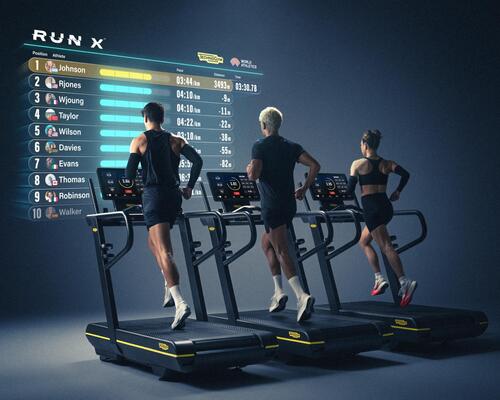

New HFA research identifies growth opportunities for fitness in Latin America



Young and affluent consumers are leading health club usage in Latin America, according to research from the Health and Fitness Association (HFA) and there are further opportunities to engage lapsed and never-members.
Seventy eight per cent of Latin Americans in major metropolitan areas in Brazil, Mexico, Argentina, Colombia, Peru and Chile exercise several times a month, including 61 per cent who exercise multiple times weekly, according to The 2024 Latin America Consumer Survey.
The report says this is a dynamic market and in order to succeed, fitness businesses must develop a deep understanding of local consumer behaviours and preferences, offer holistic programmes and consider investing in equipment and spaces for outdoor activities.
The research was conducted by J Wallin Opinion Research on behalf of the HFA and ABC Fitness. Some 3,700 adults were surveyed in September 2024, from the largest metropolitan areas of Brazil, Mexico, Argentina, Colombia, Peru and Chile.
Key trends
Across all six countries, outdoor activities – such as cycling, running or swimming – were the most popular at 42.8 per cent. The most common reason given for exercising outdoors was that it improved mental clarity and increased energy and engagement (52.5 per cent).
Forty per cent preferred being outdoors than indoors (40.7 per cent) and many enjoyed the sense of community (18.6 per cent). Some preferred not to pay for a membership (15.3 per cent) and 11 per cent said they didn’t have any fitness facilities conveniently located.
When averaged out across all markets, strength training came second at 32.1 per cent. This is the second most popular activity in Brazil, Mexico, Argentina and Chile. However, it didn’t feature in the top four in Peru, where dance was the second most popular activity, followed by non-beach group sports.
In Colombia strength training came fourth, behind non-spin cardio activities and dance. In general, non-spin cardio exercise – such as using treadmills and ellipticals – featured highly, averaging out at 27.2 per cent.
People are exercising for both their physical and mental wellbeing. General physical wellbeing was the most common at 52.3 per cent; followed by stress reduction at 37.5 per cent; disease prevention at 34.9 per cent; increased energy at 27.9 per cent and healthy ageing at 26.3 per cent.
Barriers to using a fitness facility include cost, access to convenient facilities and a personal preference for outdoor exercise.
Gym usageEncouragingly, 69 per cent of active consumers belong to a health and fitness facility, with members skewing younger and more affluent. Seventy two per cent use facilities or trainers a few times monthly, while 54 per cent do so multiple times weekly. Only 21.7 per cent said they rarely or never exercise.
Two-thirds spend the equivalent of US$10 (€9.63, £8) to $50 (€48, £40) on health and fitness and 13 per cent spend more than that. Brazilians spend the most across the six countries.
Reasons given for exercising at a specific fitness facility include effectiveness, convenience, fitness equipment, access to trainers, getting out of the house/office, better accountability, not depending on the weather, monitoring progress on a device, access to group exercise, family or friends going to the same facility, amenities such as pools and saunas, community, a preference to being indoors and having a membership paid through work. A small proportion said they felt obligated to attend because they pay for a membership (8.9 per cent).
Expanding the market
Among the cohort who don’t use fitness facilities, many showed an interest in joining at some point. Of those who have never been members: 53 per cent say they are likely to join in the next 12 months.
Two-thirds of current non-members have previously been a member of a gym and the most common reasons for leaving were cost, time and relocation.
To broaden the market and overcome barriers, the report makes a series of recommendations. Flexible pricing and time-efficient offerings might tempt back lapsed members. Targeted outreach and introductory offers could attract the 53 per cent of never members who are thinking about joining.
To respond to the interest in mental wellbeing, holistic programmes should be offered that incorporate mental health and stress management. Operators are also encouraged to invest in high quality equipment and prioritise convenient locations.




Swim Teacher
Swim Teacher
Fitness Manager
Operations Manager
Contract Sales Manager
Membership Advisor
Recreation Assistant/Lifeguard (NPLQ required)
Team Leader
General Manager


General Manager
Swim Manager
Sports Coach
Sports Coach
Swim Teacher
Party Leader
Group Exercise Instructor - Aqua
Swim Teacher
Swim Teacher
Activity and Wellbeing Instructor
Operations Manager - Brentwood School Enterprises
Swim Teacher
GP Exercise Referral Instructor
Duty Manager




Company profile
Directory
Featured Supplier
Property & Tenders
Company: Lee Valley Regional Park Authority
Company: Newmark
Company: EiA Real Estate
Company: Savills
Company: University of Oxford