











HCM Summit opens with rallying call for fitness to take the lead in wellness and lifestyle


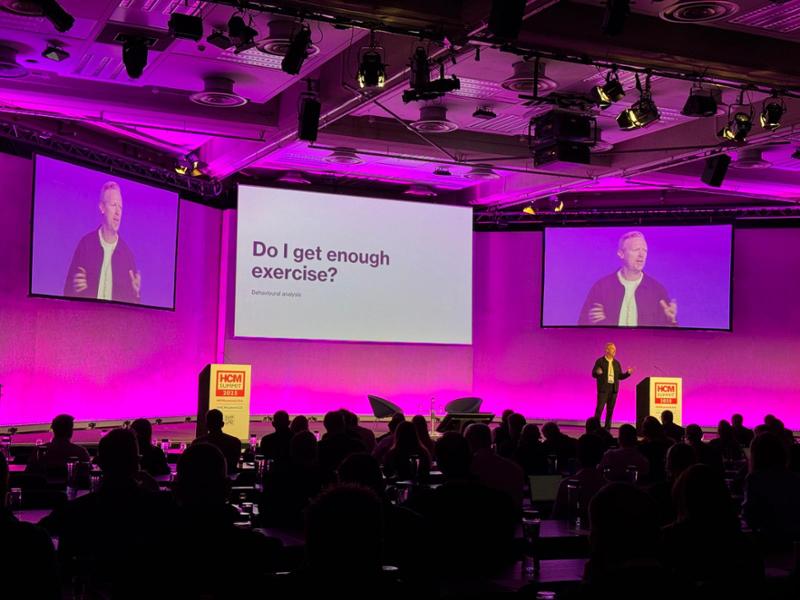
Physiologist and co-founder of Future Practice and Pillar Wellbeing, Oli Patrick opened the HCM Summit in London this morning with an inspiring talk about consumer testing and the opportunities in this space.
“People don’t feel well and are looking for roadmaps,” he said. “But you don’t get healthier from a health test, it’s what you do with it. Data doesn’t solve the problem, behaviour does.
“Wellness has exploded in the consumer mindset and wellness burnout is prolific – 63 per cent feel powerless about improving their wellbeing.”
With lifestyle being the biggest determinant of how well the body works and exercise being a fundamental elixir, the opportunity is ripe for the fitness industry to own this space he says – stating that testing and data is pointless without behaviour change.
While there are opportunities for operators to partner with diagnostic companies, Patrick says that partnerships must be integrated and staff fully trained. Teams need to understand what is being tested and the clinical team must also buy into the intervention. Selling a service without teams fully understanding it won’t work, so this does come with an operational and training cost.
“At the moment there is a gap between information and execution,” he said. “Change doesn’t happen without change, so help your members change through the behaviours you are selling. As a sector we need to grab the opportunity to prove that we are valuable, become the wellbeing sector and the true pre-disease marketplace. No one currently owns lifestyle, the industry could own this space.”
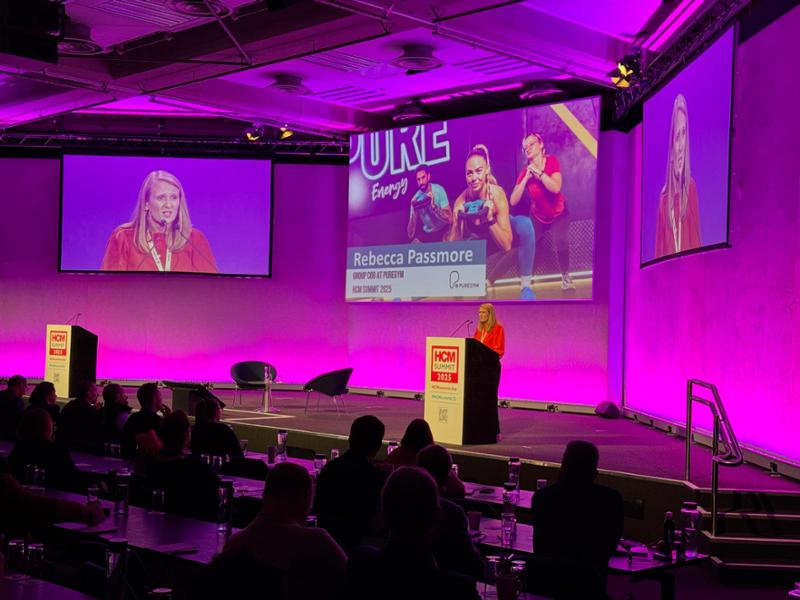
Following Patrick, PureGym’s COO, Rebecca Passmore, talked about how dynamics are shifting in favour of the health club industry. Young people are drinking far less than before, she said, highlighting the timely appointment of CEO, Clive Chesser, who comes from the world of pubs and hospitality at a time when younger generations are now socialising in gyms rather than pubs.
Society is placing much greater importance on wellbeing, she added. GLP-1s are being prescribed more and more and the UK government's 10-year health plan explicitly underlines the need to work with businesses and local authorities to create a healthier country.
"We should be hugely excited about these guidelines," she said, "but it's not going to land in our laps – we need to grab these opportunities with both hands."
Passmore also highlighted PureGym's partnership with Sir Chris Hoy. Partnering with Hoy, the Institute of Cancer Research and the Royal Marsden, PureGym now offers a structured exercise programme for men with advanced prostate cancer to combat the effects of hormone therapy.
"There are very few programmes like this," she said. "We have the scale and the facilities to be able to change that. I'm super proud of this bold move and amazed by the uptake."
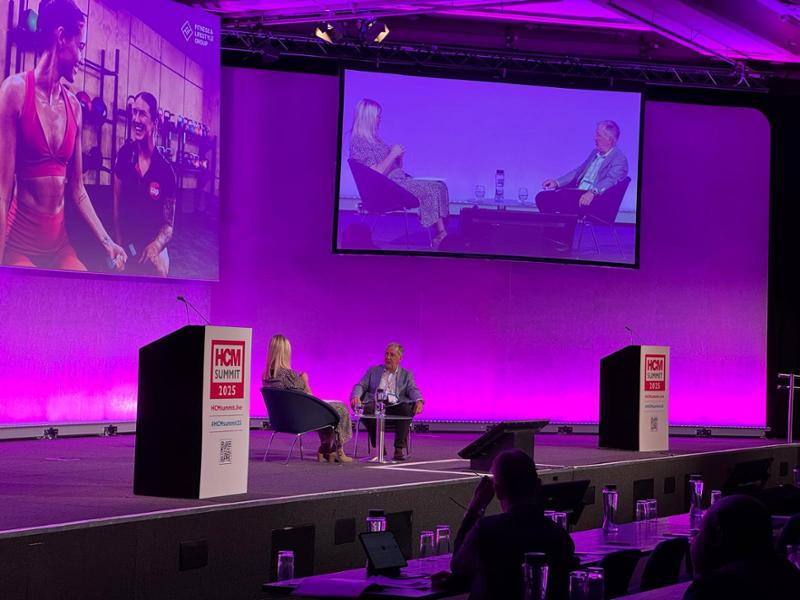
Greg Oliver, CEO and managing director of the Australian and Asian company, Fitness and Lifestyle Group, flew in from Australia to be interviewed on stage by HCM’s editor-at-large, Kate Cracknell.
FLG is APAC’s largest operator of corporate-owned health clubs, including Barry’s, Fitness First, Jetts, Good Life Health Clubs.
Oliver explained how FLG took the opportunity of the pandemic to redefine the offering. “It would have been easy to carry on operating in the same way, but we decided not to waste a good crisis and work out how we fit into the eco-system of the health and fitness world and respond to the future consumer,” he said.
The team looked at the efficiency of the floorspace and what members were and weren’t valuing, what would they pay for, and what they would pay more for. As a result, the team took the decision to scrap the childcare offering, which unlocked 30,000sq m of space to remodel the business around a premium value strategy, offering boutique-quality programming.
Three new modalities have been introduced in line with what customers were calling for: reformer Pilates recovery zones and functional strength.
For a full report see the interview with Greg Oliver in this month’s issue of HCM
Total Fitness CEO Sophie Lawler talked about reimagining the mid-market “broken business” she took the helm of in 2018 and how allowing boredom, being uncommercial and deep listening are fundamental to her leadership.
“To be bored at least 20 per cent of the time is a duty of leadership,” she says. “The space to listen, think, take inspiration and work out the right questions.”
Total Fitness has generated some of the largest sources of industry consumer insight data – over the course of a year, its nationwide consumer panels generate more than 75,000 records of primary insights which – in a generous gift to the industry – it is preparing to share in the new year, via a report from CIL Management Consultants.
"This industry frustrates the hell out of me," she said. "The total addressable market could be 100 per cent – who doesn't need exercise – yet our penetration rates are sub 20 per cent in the UK."
She says there are lots of reasons for this, but one of the main ones is the limited amount of customer listening.
Key findings include:
- Scale is misleading, it's not about the competitive landscape. Members really don't choose between many options of facilities on average.
- When questioned, 60 per cent of members say the role of the cleaner is extremely important, compared with just 30 per cent of members who think fitness advice is important!
- Seven per cent of gym members are already using GLP-1s compared with 2.6 per cent of non-gym members. 42 per cent of gym members who are using them see them as a way to work out more.
- Parental guilt is a major factor in the booking of swimming lessons.
- The biggest barrier for women joining is how they look.
- Gen Z join in groups of three or more because they’re anxious.
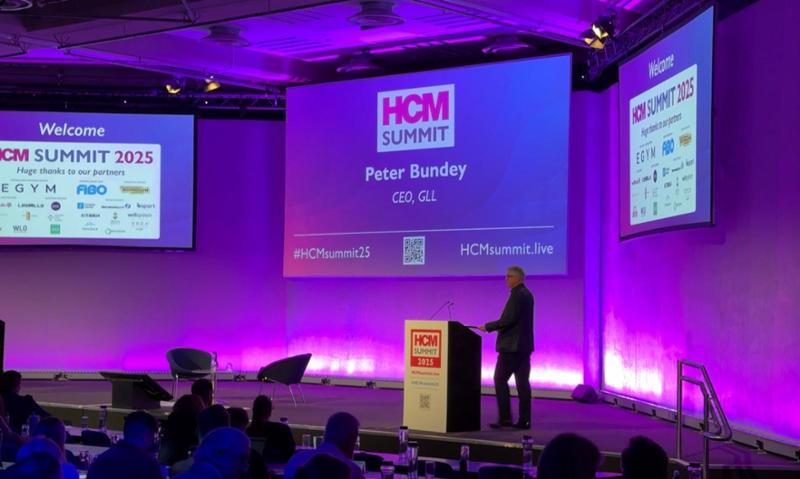
In the second of the two morning sessions, Peter Bundey, CEO of GLL, the largest leisure centre operator in the UK, talked about the importance of working with values, which is underpinned by the company’s status as a charitable social enterprise.
GLL’s annual user survey – which has a reach of 53,500 – found that 67 per cent knew that GLL is a charitable enterprise and 11 per cent said these values are a key factor in their purchasing decision when becoming a member. That represents 75,000 members and 350,000 casual users who are choosing GLL because of the company’s values.
Bundey also said that insights show that while cost still has a big impact in decision-making about joining a gym, environment and social impact is growing in importance, especially for 16- to 34-year-olds.
GLL is a Gold Investors in People and company surveys showed that 20 per cent of staff agree that values guide how they work. “Staff felt the shift in our values are aligned with their beliefs,” said Bundey. “People are prepared to do extra because they have a belief in what they are giving back.”
“Working from values has a positive impact on numerous fronts, including with customers, staff and national and regional partnerships. However, it has to be a root branch total commitment to make it work. If it’s just words it will unravel very quickly.”
Anna Bjurstam, strategic advisor, Six Senses, speaking just before lunch, said: "The fitness industry is facing an identity crisis. Longevity, whether you like it or not, is here to stay. We're living longer but not living healthier and this needs to be addressed.
"The next frontier for the industry has to be health optimisation," she said.
Bjurstam highlighted four business models for fitness operators to consider when integrating longevity. From entry-level longevity-informed clubs offering enhanced programming such as strength training for bone density and balance/mobility to integrated longevity hubs where you have a dedicated medical clinic alongside fitness and spa.
Some interesting operators she spotlighted included Sparkd, a brain and fitness hub in Singapore based on activities that simultaneously enhance cognitive health and fitness, and Six Senses Place, a new social wellness/longevity membership club due to open at The Whitelely in London in February.
Bjurstam added: "The way people are experiencing fitness is evolving – today, people are joining gyms because they want better mental health, not just phsyical exercise. Your competitor isn't the gym down the street – it's Prozac and mindless scrolling. The fitness industry needs change with this and there's a lot it can do from looking at breathwork, to biohacking and multisensory experiences to make that shift."

Contract Sales Manager
Membership Advisor
Recreation Assistant/Lifeguard (NPLQ required)
Team Leader
General Manager
General Manager
Swim Manager
Membership Advisor
Sports Coach


Sports Coach
Swim Teacher
Party Leader
Group Exercise Instructor - Aqua
Membership Advisor
Swim Teacher
Swim Teacher
Activity and Wellbeing Instructor
Operations Manager - Brentwood School Enterprises
Swim Teacher
GP Exercise Referral Instructor
Duty Manager

Catalogue Gallery


Company profile
Directory
Featured Supplier
Property & Tenders
Company: Lee Valley Regional Park Authority
Company: Newmark
Company: EiA Real Estate
Company: Savills
Company: University of Oxford