

















Google plans to distribute AR platform Tango to museums worldwide


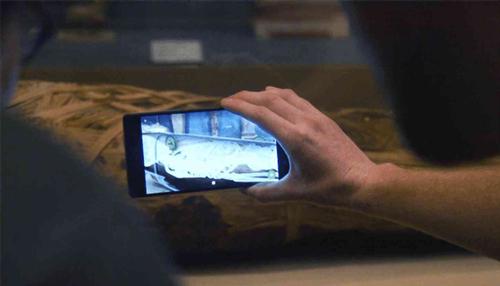
Google’s augmented reality platform Tango is partnering with a number of museums, offering visitors starting at the Detroit Institute of Arts opportunities to interact with works using the technology.
Devices capable of hosting Tango utilise sensors not found in most phones, allowing added depth and scale, which in turn allows digital overlays to be applied more accurately over 3D surfaces.
For visitors to the museum, they can request a Lenovo Phab 2 Pro – the first Tango-enabled smartphone – for use in the museum, using the handset to learn more about different artefacts, with examples offered including revealing the inside of a mummified body, visualising lost architecture and showing limestone works with their original colouring.
Developed by GuidiGo, an app developer which previously created augmented reality museums guides for the currently on-hold Google Glass project, the Tango app will also include quizzes and games.
Following its initial run in Detroit, the technology will be rolled out to a number of yet-to-be-named museum, enhancing the interactive experience for institutions worldwide.
“Museums can be great teachers. From art and science to culture and natural history, they educate and inspire us. Still, display signs and audio guides can only convey so much. What if you could explore museums in a different way,” said Justin Quimby, senior product manager for Tango.
“This is just the beginning of how you’ll be able to use Tango in museums to see more, hear more and learn more. Stay tuned as we bring Tango to even more museums around the world.”





Membership Advisor
Customer Service Advisor
GP Exercise Referral Instructor
Swim Manager
Food and Beverage Manager
Activity and Wellbeing Coordinator
Team Leader
Duty Manager
Membership Advisor


Swim Teacher
Food & Beverage Assistant





Company profile

Directory
Featured Supplier

Property & Tenders
Company: Lee Valley Regional Park Authority
Company: Newmark
Company: EiA Real Estate
Company: Savills
Company: University of Oxford