















Brain 'can be trained' to operate computers using yoga and meditation


Long term practitioners of yoga and meditation can learn to control a computer with their minds faster and better than people with little or no yoga or meditation experience, according to research by biomedical engineers at the University of Minnesota. The study was conducted to find out how to provide paralysed people or sufferers of brain diseases with mobility and independence.
Published in the online scientific journal Technology, the research involved a total of 36 people. One group of 12 had at least one year of experience in yoga or meditation – practising at least twice a week for one hour. The second group of 20 participants had little or no yoga or meditation experience. Both groups’ brain activity were monitored during three two-hour experiments over four weeks.
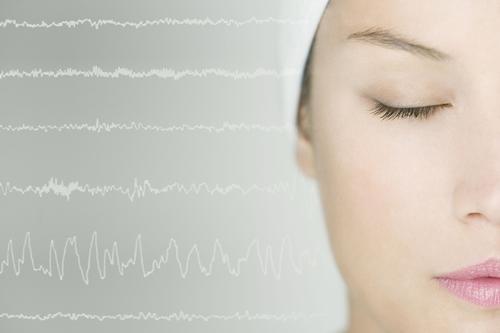
A high tech cap was placed over the scalp of the participants and they were each asked to move a computer cursor across the screen by imagining left or right hand movements. The cap measured voltage fluctuations in the participants’ brains – known as EEG ((Electroencephalography).
The participants in the yoga and meditation group were twice as likely to complete the brain-computer interface task by the end of 30 trials and learned three times faster than their counterparts for the left-right cursor movement experiments.
The researchers are focused on finding a mobility solution for people whose brain function is intact but are physically disabled, however not everyone can easily learn to control a computer with their brains and many people are unsuccessful after many attempts, according to lead researcher Bin He – director of the university's Institute for Engineering in Medicine and the Center for Neuroengineering. He found that a consistent and reliable EEG brain signal may depend on an undistracted mind and sustained attention. Meditators have shown more distinctive EEG patterns than untrained participants, which may explain their success.
The next step for Bin He and his team is to study a group of participants as they learn yoga or meditation for the first time, to see if their performance on the brain-computer interface improves.







Membership Advisor
Customer Service Advisor
GP Exercise Referral Instructor
Swim Manager
Food and Beverage Manager
Activity and Wellbeing Coordinator
Team Leader
Membership Advisor
Swim Teacher


Food & Beverage Assistant

Catalogue Gallery



Company profile
Directory
Featured Supplier
Property & Tenders
Company: Lee Valley Regional Park Authority
Company: Newmark
Company: EiA Real Estate
Company: Savills
Company: University of Oxford