
















Have scientists cracked the code to controlling health habits?


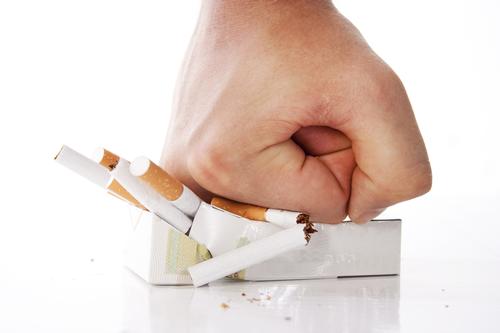
Neuroscientists at the Massachusetts Institute of Technology may have found a way to control the performance of habitual behaviours, potentially leading to the prevention or maintenance of habits and routines.
In a study published in the Proceedings of the National Academy of Sciences, experts believe they have discovered that a small section of the brain’s prefrontal cortex is responsible for controlling which habits are switched on and off.
The study was conducted amongst a group of rats, with scientists setting up conditions to create habitual behaviours in their specimens.
The rats were placed into a T-shaped maze and were made to run towards the T turning. When they reached the turn they were played a tone to determine whether to go left or right. If they choose the correct turn, the rats were given a treat, received in the form of either chocolate milk for turning left, or sugar water for turning right.
To prove the behaviour was habitual the scientists stopped rewarding the rats for the right decisions, leaving the specimens to still make the correct choices based on habitual behaviour.
In order to impact on the brain’s habitual choices, the researchers then used optogenetics to inhibit specific cells with light and turn off the rats’ IL cortex activity for several seconds when they approached the T-junction in the maze.
As a result, when the IL activity was turned off, the rats began to forget their previous habit of turning left and started to make right turns where a more enticing reward was placed.
However, the researchers then intervened again using light and it was found that the rats were able to rediscover their old habits again and instantly began to make left turns as conducted before the first IL intervention.
Though optogenetic intrusions may be too invasive to use on humans, the experts believe that technology could evolve to the point where measures could be used to treat disorders involving repetitive or addictive behaviour.
The scientists plan to conduct further studies in order to determine exactly when during a maze-run, the IL cortex selects the appropriate habit for the rats to abide by. They also want to study exactly which parts of the cortex have the most impact on the conduction or restriction of habitual actions.

Recreation Assistant (Dry Site)
Team Leader (Dry Site)
Community Activator Coach Apprentice
Membership Advisor
Customer Service Advisor
GP Exercise Referral Instructor
Swim Manager
Activity and Wellbeing Coordinator
Membership Advisor


Food & Beverage Assistant

Catalogue Gallery



Company profile

Directory
Featured Supplier
Property & Tenders
Company: Lee Valley Regional Park Authority
Company: Newmark
Company: EiA Real Estate
Company: Savills
Company: University of Oxford